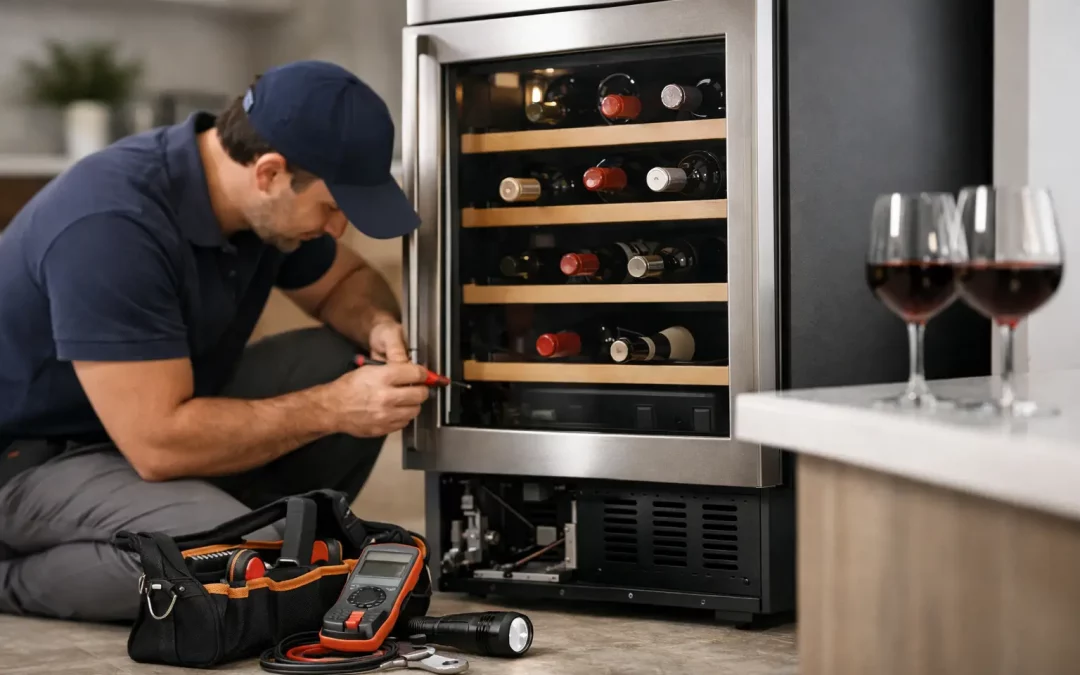
A wine cooler that is running warm can turn a carefully chosen collection into an expensive disappointment. Wine cooler repair is not only about getting the display panel working again. It is about restoring stable temperatures, proper airflow, and the quiet operation that helps protect wine over time.
For homeowners in Halifax Regional Municipality and nearby Nova Scotia communities, a wine cooler problem often starts small: a little more noise, fogged glass, bottles that feel warmer than expected, or a unit that runs constantly. Addressing those signs early can prevent a minor fan, seal, or drainage issue from becoming a compressor problem.
What a Wine Cooler Is Supposed to Do
Most wine coolers are designed to hold a steady temperature rather than cool food quickly. Depending on the model and whether it is single-zone or dual-zone, the normal set point may fall somewhere between 7 C and 18 C. The exact ideal setting depends on the wine being stored, but consistency matters more than chasing a perfect number.
A well-functioning unit should cycle on and off, maintain an even temperature, close firmly, and allow air to move around the bottles. It should not produce heavy frost, puddles, persistent rattling, or major temperature swings. A little compressor hum is normal. Loud knocking, scraping, or repeated clicking is not.
Built-in wine coolers need particular attention because they rely on correct ventilation. If warm air cannot escape through the required openings, the appliance may overheat and work harder than it should. A repair may solve the immediate fault, but a tight cabinet installation can bring the problem back.
Signs You Need Wine Cooler Repair
Do not rely only on the temperature shown on the control panel. A faulty sensor or control board can display the selected temperature even when the cabinet itself is too warm. An inexpensive appliance thermometer placed inside the cooler gives you a better picture of actual performance.
Call for service when you notice any of these recurring issues:
- The cooler is above its set temperature, or temperatures change noticeably from day to day.
- The compressor runs almost continuously, clicks repeatedly, or does not start at all.
- Frost builds on the back wall or evaporator area, or water collects inside or beneath the unit.
- The door will not seal, the glass sweats heavily, or the interior light and controls behave unpredictably.
One warm bottle after the door has been open is not necessarily a failure. A cabinet full of room-temperature bottles, a hot kitchen, or insufficient clearance can make a wine cooler work longer for several hours. If it does not recover after the door stays closed and airflow is checked, the issue deserves a closer look.
Warm Cabinet, Cold Compressor
This is one of the more frustrating symptoms because the cooler sounds as though it is working. Common causes include dirty condenser coils, a failed condenser fan, an evaporator fan problem, a faulty thermostat or sensor, or restricted airflow around the appliance. In some cases, the sealed cooling system has lost refrigerant or the compressor is no longer pumping effectively.
The first group of issues is often repairable at a reasonable cost. A sealed-system or compressor failure can be more involved, particularly on a compact or older wine cooler. A technician should diagnose the cause before anyone assumes the compressor is the problem.
Frost, Ice, and Water Inside the Cooler
Frost usually points to moisture entering the cabinet or a defrost-related problem. A worn door gasket, door that is slightly out of alignment, blocked drain, or defective fan can all contribute. Frost blocks airflow, so one part of the cabinet may become very cold while another stays too warm.
Never chip ice away with a knife or screwdriver. The interior liner and cooling components can be damaged easily, turning a manageable repair into a replacement decision. Unplugging the unit and allowing it to thaw may temporarily restore airflow, but the underlying cause still needs to be found if frost returns.
Strange Noises and Constant Running
Vibration can be as simple as an unlevel cooler, a bottle touching the cabinet wall, or loose shelving. Remove contact points, make sure the appliance is level, and confirm it is not pressed tightly against cabinetry. If the noise continues, a worn fan motor, compressor mount, relay, or internal component may be responsible.
Constant running is more urgent than it sounds. It increases electricity use and places extra stress on the compressor. Before booking service, confirm that the condenser area is free of dust, the vents are open, and the door gasket is clean and undamaged. If those checks do not help, professional diagnosis is the sensible next step.
Safe Checks Before You Book Service
A few simple checks can save time and help identify an installation issue. Start by confirming the outlet has power and that the cooler is plugged directly into a properly grounded wall outlet. Avoid extension cords and power bars unless the manufacturer specifically allows them.
Next, inspect the door gasket. Wipe it with warm water and mild soap, then dry it completely. Look for tears, hardened areas, or spots where the gasket has pulled away from the door. Close a sheet of paper in different sections of the door. If it slides out with almost no resistance, the seal may be weak.
Check ventilation and cleaning as well. Freestanding models need clearance around the sides and back, while built-in models need their specified front vent area unobstructed. Carefully vacuum accessible dust from the condenser area after unplugging the cooler. Do not bend fins, remove electrical covers, or attempt to recharge refrigerant yourself.
If the unit has been moved or delivered recently, it may need to stand upright before being turned on. Check the manufacturer instructions for the recommended waiting time. Starting a cooler immediately after it has travelled on its side can affect the compressor system.
Is Repair Worth It?
The answer depends on the cooler’s age, brand, capacity, condition, and the specific failed part. A door seal, fan motor, thermostat, sensor, relay, or drain issue is commonly worth repairing when the cabinet is otherwise in good condition. These repairs can restore temperature stability without the cost and disruption of replacing a built-in appliance.
Replacement becomes more likely when a low-cost unit has a compressor or sealed-system fault, replacement parts are no longer available, or multiple components have failed. Cosmetic condition matters too. If the door hinges are worn, shelves are broken, the cabinet is rusting, and cooling performance is poor, putting more money into the same unit may not make sense.
For a built-in wine cooler, replacement requires more planning than a freestanding model. Cabinet dimensions, ventilation requirements, door swing, and panel finish may limit the options. A proper diagnosis gives you the information needed to compare a repair estimate against the true cost of replacement and installation.
Why Correct Diagnosis Matters
Wine coolers are compact, but they contain many of the same systems found in larger refrigerators: electronic controls, sensors, fans, defrost components, sealed refrigeration parts, and door seals. Similar symptoms can have very different causes. A warm cabinet may be a dirty condenser, but it could also be a failed fan, incorrect installation, or a control issue.
Replacing parts by guesswork is rarely economical. It can also create new problems, especially when electrical components or the sealed refrigeration system are involved. A qualified appliance technician can test temperatures, airflow, electrical components, and compressor operation, then explain the repair in plain language before work begins.
Instant Appliance Repair provides local in-home diagnosis and repair for wine coolers and other major household appliances across Halifax and surrounding communities. Customers receive clear advice on whether a repair makes practical sense, with a 90-day parts-and-labour warranty on completed repairs.
Help Your Wine Cooler Last Longer
Good maintenance is uncomplicated. Keep ventilation clear, clean dust from accessible condenser areas, and avoid packing bottles so tightly that internal airflow is blocked. Open the door only when needed, especially during warm weather, and do not place hot bottles or food inside the cabinet.
Keep the cooler level so the door closes properly and condensate can drain as intended. Check the gasket a few times a year, particularly if you notice sweating on the glass or the compressor running more often. For dual-zone models, remember that each zone needs circulation, so do not treat one section as overflow storage.
If your wine cooler is warm, noisy, frosty, or running without a break, move valuable bottles to a stable, cool location while the issue is assessed. Early service can often protect both the appliance and the collection it was meant to keep ready for your next occasion.