
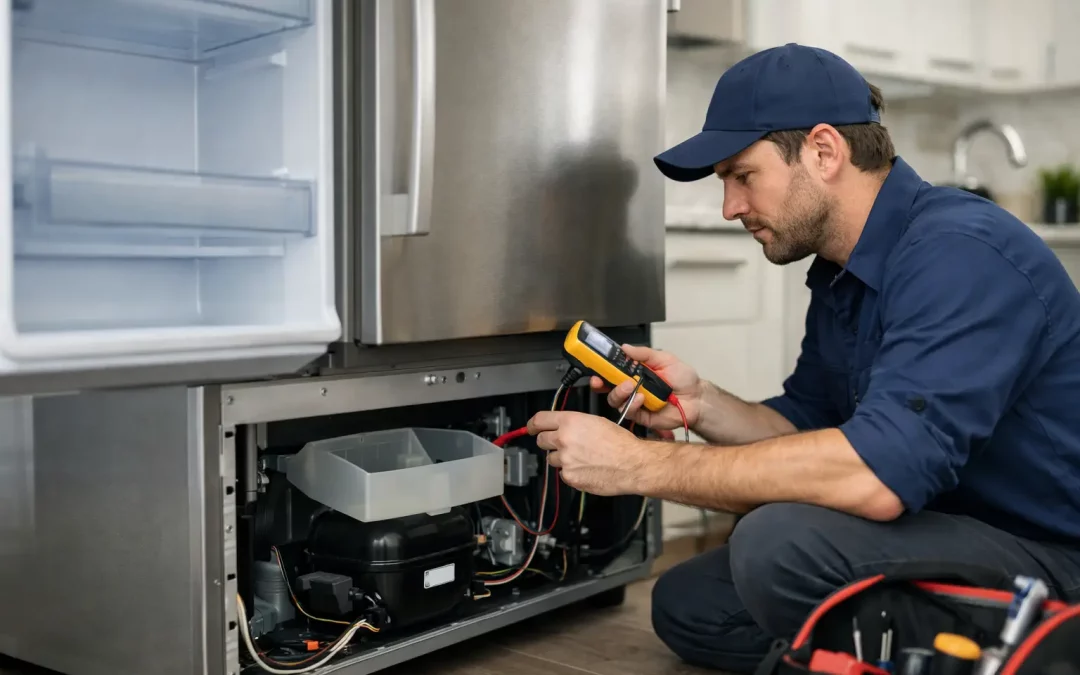
A fridge that suddenly feels warm is more than an inconvenience. Groceries can spoil quickly, meal plans get disrupted, and it is hard to know whether the problem is a simple setting or a failing part. For refrigerator not cooling repair Halifax homeowners can rely on, the first priority is protecting your food, then getting a clear diagnosis before a small issue becomes a larger repair.
What to Do When Your Refrigerator Stops Cooling
Check the temperature before assuming the refrigerator has failed. The fresh-food compartment should generally sit at 1 to 4 C, while the freezer should be around -18 C. A fridge can still have lights, a running fan, or a working display while cooling performance has dropped.
Keep the doors closed as much as possible. An unopened refrigerator can usually hold a safe temperature for about four hours, but that window gets shorter in a warm kitchen or during a summer power interruption. Move high-risk items such as meat, dairy, leftovers, and prepared foods into a cooler with ice if the fridge compartment is warming up.
Before booking service, take a few safe, practical steps:
- Confirm the appliance has power and that the breaker has not tripped.
- Check that the temperature controls were not accidentally changed.
- Make sure food packages are not blocking interior vents.
- Look for a door that is not closing fully because of a damaged gasket, overfilled shelf, or item caught in the way.
- Pull the refrigerator forward only if it is safe to do so, then check whether the rear or bottom ventilation area is packed with dust.
Do not chip ice from the freezer wall with a knife or sharp tool. It is easy to puncture a panel, refrigerant line, or wiring behind it. If there is a heavy frost build-up, it often points to a defrost-system or door-seal problem that needs proper testing.
Common Reasons a Refrigerator Is Not Cooling
A refrigerator works as a system. Cool air must be created, circulated, and kept inside the cabinet. The fault may be straightforward, but similar symptoms can come from very different causes.
Blocked airflow or dirty condenser coils
Most refrigerators need space around the appliance and clean condenser coils to release heat. Dust, pet hair, and lint can collect beneath or behind the unit, making the compressor work harder and reducing cooling efficiency. This is especially common in homes with pets or in kitchens where the fridge has not been moved for several years.
Cleaning accessible coils may help, but it will not solve every cooling issue. If the compressor is extremely hot, the refrigerator runs constantly, or temperatures remain high after cleaning, a technician should test the rest of the cooling system.
A failed evaporator fan or condenser fan
Fans move heat away from the refrigerator and circulate cold air through the compartments. When an evaporator fan fails, the freezer may be cold while the refrigerator section is warm. You might also notice weak airflow from the vents or an unusual grinding, squealing, or buzzing sound.
A condenser fan issue can make the whole appliance struggle, particularly on models with the compressor and fan at the bottom rear. These parts require an accurate diagnosis because a sound that seems like a fan can also come from the compressor, ice maker, or defrost system.
Defrost problems and ice build-up
Frost-free refrigerators regularly melt frost from the evaporator coil. If the defrost heater, sensor, thermostat, timer, or electronic control fails, ice can cover the coil and prevent air from moving. The freezer may develop a snowy back panel, while the refrigerator compartment becomes progressively warmer.
Temporarily thawing the appliance can restore cooling for a short time, but it does not repair the failed component. If the same frost returns, the underlying defrost fault needs attention.
Door-seal and damper issues
A worn gasket lets warm, humid kitchen air into the fridge. You may see moisture around the door frame, frost in the freezer, or a door that opens too easily. In other cases, the gasket is fine but the internal air damper is stuck closed, preventing cold freezer air from reaching the fresh-food compartment.
These issues are often repairable, but the right repair depends on the model and the condition of the appliance. A technician can check the seal, hinges, damper, and airflow path rather than replacing parts by guesswork.
Compressor, relay, control board, or sealed-system faults
Some refrigerator problems are more complex. A clicking sound followed by silence may indicate a start relay or compressor issue. A refrigerator that runs continuously but never gets cold can have a sealed-system concern, such as a refrigerant leak or compressor failure. Electronic control boards can also cause erratic cooling, especially when displays, fans, or defrost cycles are behaving unpredictably.
These repairs should not be treated as do-it-yourself work. Refrigerant systems, high-voltage components, and electronic controls need the right tools and testing process. Replacing a part based only on an online symptom match can add cost without fixing the fault.
When Refrigerator Not Cooling Repair in Halifax Makes Sense
Repair is often the sensible choice when the refrigerator is under 10 years old, in otherwise good condition, and has a replaceable issue such as a fan motor, relay, gasket, sensor, or defrost component. Built-in models, counter-depth units, and premium refrigerators may also be worth repairing at an older age because replacement can involve cabinet changes, delivery constraints, and a much higher purchase cost.
Replacement may be worth considering when an older, basic refrigerator has a major sealed-system or compressor failure. The decision depends on the estimate, the appliance age, its overall reliability, and whether parts remain available. A good diagnosis should give you enough information to choose confidently, not pressure you into a repair that does not make financial sense.
For landlords and property managers, fast action matters for another reason: a warm refrigerator can affect a tenant’s food, daily routine, and confidence in the property. Prompt service and clear communication can prevent a manageable issue from becoming an emergency replacement.
What to Expect From a Professional Visit
A proper in-home refrigerator service call starts with questions about the symptoms. Is the freezer still cold? Did cooling fade slowly or stop overnight? Is there frost, water, clicking, or a new noise? Those details help narrow the diagnosis, but the technician should still test the appliance rather than rely on symptoms alone.
The inspection may include checking temperatures, airflow, fans, door seals, electrical connections, compressor operation, defrost components, and control signals. Once the problem is identified, you should receive a plain-language explanation of what failed, what the repair involves, and whether repair is a practical investment.
Instant Appliance Repair serves Halifax Regional Municipality and nearby Nova Scotia communities with fast, personalized residential appliance service. Same-day appointments may be available, and every completed repair includes a free service call along with a 90-day parts-and-labour warranty. That gives homeowners a clearer path forward when a refrigerator problem cannot wait.
How to Help Your Refrigerator Last Longer
Regular care does not prevent every breakdown, but it can reduce strain on the appliance. Keep vents clear inside the fridge, avoid overpacking the freezer, and clean accessible condenser areas periodically. Check that the doors close smoothly and do not leave them open while unloading groceries.
Give the refrigerator adequate breathing room based on the manufacturer’s installation guidance. A tight enclosure, hot garage, or appliance placed beside a heat source can make cooling harder. If you notice recurring frost, puddles, loud fan noise, or food that is not staying cold, arrange service before the issue affects the compressor or causes food loss.
If your refrigerator is warm today, protect perishables first and avoid taking the appliance apart. A timely diagnosis can be the difference between replacing a small component and facing a much bigger interruption in your kitchen.