
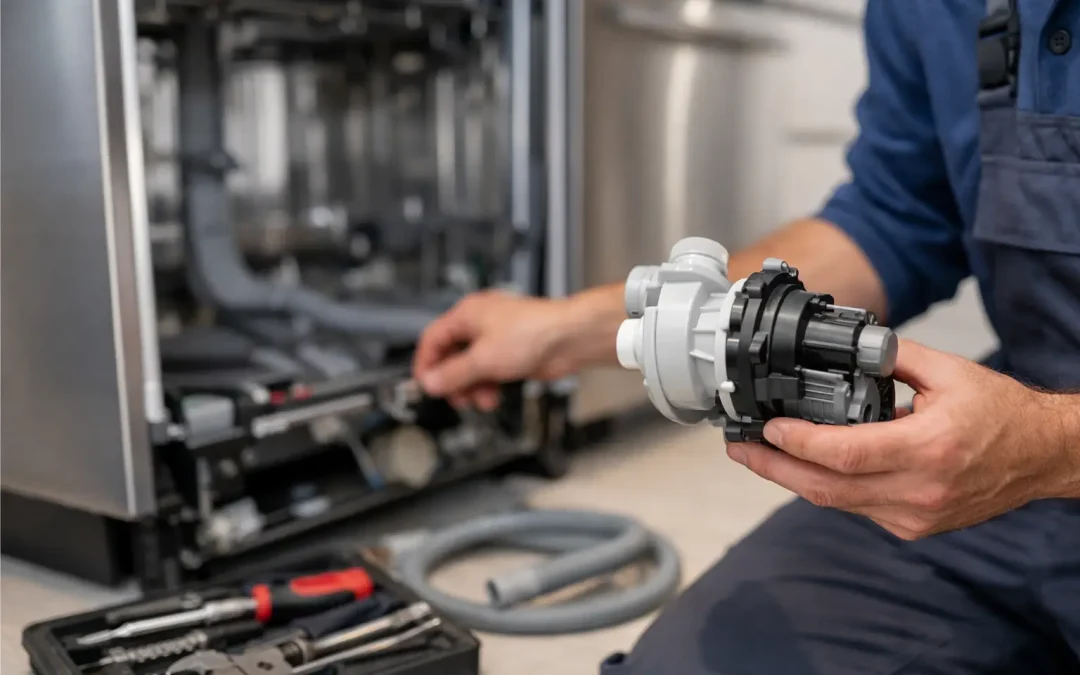
A dishwasher that finishes a cycle with dirty water sitting in the bottom is more than an inconvenience. It can leave dishes unwashed, create odours, and turn a busy evening into a sink full of dishes. Dishwasher pump replacement is often the right fix, but only after confirming which pump has failed and ruling out simpler problems such as a blocked filter, drain hose, or air gap.
For homeowners in Halifax and surrounding Nova Scotia communities, the practical question is usually straightforward: can this dishwasher be repaired quickly and reasonably, or is it time to replace it? The answer depends on the type of pump, the dishwasher’s age, the condition of the appliance, and what the diagnosis reveals.
What a dishwasher pump actually does
Most dishwashers rely on one or two pumps to move water where it needs to go. The circulation pump pushes water through the spray arms during the wash cycle. If it is not working properly, dishes may come out greasy, gritty, or only partly cleaned even though the machine fills and drains.
The drain pump removes used water from the tub at the end of each stage of the cycle. A failed drain pump can leave standing water inside the dishwasher or cause the unit to stop and display an error code. Some models use a combined pump and motor assembly, while others have separate components. That difference matters because it affects both the part required and the repair cost.
A pump is not always the source of the problem. Food debris in the filter, a broken piece of glass near the impeller, a kinked drain hose, a clogged sink connection, or an electrical fault can produce similar symptoms. A proper diagnosis prevents paying for a part that will not solve the issue.
Signs you may need dishwasher pump replacement
A dishwasher will often give a few warnings before a pump fails completely. The clearest sign is water remaining in the bottom after the cycle, especially when cleaning the filter does not improve drainage. You may also hear an unusual humming, grinding, rattling, or high-pitched sound while the dishwasher is trying to drain or wash.
Watch for these common symptoms:
- Water pooling in the tub after a cycle
- Dishes that remain dirty because the spray arms are not getting enough water pressure
- A dishwasher that hums but does not drain or circulate water
- Repeated error codes, interrupted cycles, or a burning electrical smell
A brief humming sound can sometimes mean an obstruction is holding the pump impeller in place. A grinding sound may indicate damaged internal components. If there is a burning smell, repeated breaker tripping, or visible leaking under the dishwasher, stop using the appliance until it has been checked. Continuing to run it can cause water damage or create a larger electrical repair.
Drain pump symptoms versus circulation pump symptoms
The difference is usually visible in the results. A drain pump issue typically leaves water behind. The dishwasher may wash normally at first, then stop before the final drain or leave cloudy water in the base of the tub.
A circulation pump issue often shows up as poor washing. You may hear the dishwasher fill, but there is little or no active wash sound afterward. The spray arms may not move, detergent may remain in the dispenser, and dishes may come out almost as dirty as they went in.
Some symptoms overlap, which is why testing matters. A technician can inspect the filters and drain path, check for obstructions, test the pump electrically, and confirm whether the control board is sending the proper voltage. That is a more reliable approach than replacing parts based on an error code alone.
What happens during a professional pump replacement
A dishwasher pump replacement begins with identifying the correct failed component. The dishwasher is disconnected from power and water, then carefully pulled out if access is needed from underneath. Depending on the model, the technician may reach the pump from inside the tub or from the base of the appliance.
The old pump is removed, connections and seals are inspected, and the correct replacement part is installed. This is also a good time to check the drain hose, filter housing, sump area, wiring, and signs of hidden leakage. Once the dishwasher is reassembled, it should be tested through filling, washing, draining, and leak checks before the job is considered complete.
This work sounds simple, but access can be tight and water connections are easy to disturb. Built-in dishwashers are heavy, supply lines can be brittle with age, and an incorrectly seated seal can cause a slow leak beneath the flooring. For most homeowners, professional service is the safer and less stressful option.
Is it worth repairing a dishwasher pump?
In many cases, yes. If the dishwasher is otherwise in good condition and the pump is the only significant fault, replacing it can extend the appliance’s useful life for years. This is particularly true for a mid-range or premium model that is under roughly eight to 10 years old and has no history of frequent breakdowns.
The decision changes when the appliance has several issues at once. A worn door seal, rusting racks, damaged control board, recurring leaks, and a failed pump can make replacement the more sensible long-term choice. Parts availability also matters. Older or discontinued models may require costly parts or longer wait times.
There is no single repair cost that fits every dishwasher. The total depends on the brand, model, pump type, access required, and whether there is a blockage or wiring issue in addition to the pump. A clear diagnosis and written explanation of the recommended repair help you compare the cost with the value of the appliance before authorizing work.
For landlords and property managers, a timely repair often avoids a larger disruption. Standing water can lead to tenant complaints, kitchen odours, and potential cabinet or flooring damage. Addressing a suspected pump problem early is usually less expensive than waiting for a complete failure or leak.
Can you replace a dishwasher pump yourself?
A confident DIY homeowner may be able to replace a pump on a simple, accessible model. However, the job requires the exact correct part, safe disconnection of electricity and water, and careful handling of clamps, seals, hoses, and wiring. It also requires knowing whether the pump is truly at fault.
Before attempting any work, turn off power at the breaker rather than relying on the dishwasher controls. Shut off the water supply, place towels around the work area, and be prepared for residual water in the hoses and pump housing. Never force a dishwasher out of its opening if the water line or drain hose is still connected.
DIY repair may not be the best choice when the dishwasher is integrated into cabinetry, the fault involves wiring, there is water under the unit, or you are unsure whether the problem is the pump, control board, or drain system. An incorrect repair can turn a manageable service call into cabinet damage or a more costly appliance failure.
How to help your dishwasher pump last longer
Pumps work harder when debris reaches the sump area or when drainage is restricted. Scrape heavy food waste from dishes before loading them, but there is no need to pre-rinse every plate. Clean the filter regularly, especially if you notice slow drainage or food particles after a cycle.
Use the right amount of dishwasher detergent for your water conditions. Too much detergent can create excess suds, while unsuitable products can leave residue that affects performance. Check the spray arms occasionally for blocked holes, and avoid putting labels, broken glass, bones, or small plastic pieces into the dishwasher where they can find their way toward the pump.
If your dishwasher begins draining slowly, making new noises, or leaving water behind, do not wait through several more cycles hoping it will clear itself. A quick inspection can sometimes find a simple obstruction before the pump motor is damaged.
Local dishwasher repair when you need a clear answer
A pump problem should be diagnosed with care, not guessed at from one symptom. Instant Appliance Repair provides in-home dishwasher service for homeowners, landlords, and property managers across Halifax Regional Municipality and nearby Nova Scotia communities. When a repair is completed, the service call is free, and covered work includes a 90-day parts-and-labour warranty.
The most helpful next step is to note what the dishwasher is doing: whether water remains in the tub, when the sound occurs, any error code shown, and the make and model if available. Those details make it easier to get the right help quickly and get your kitchen routine back on track.