
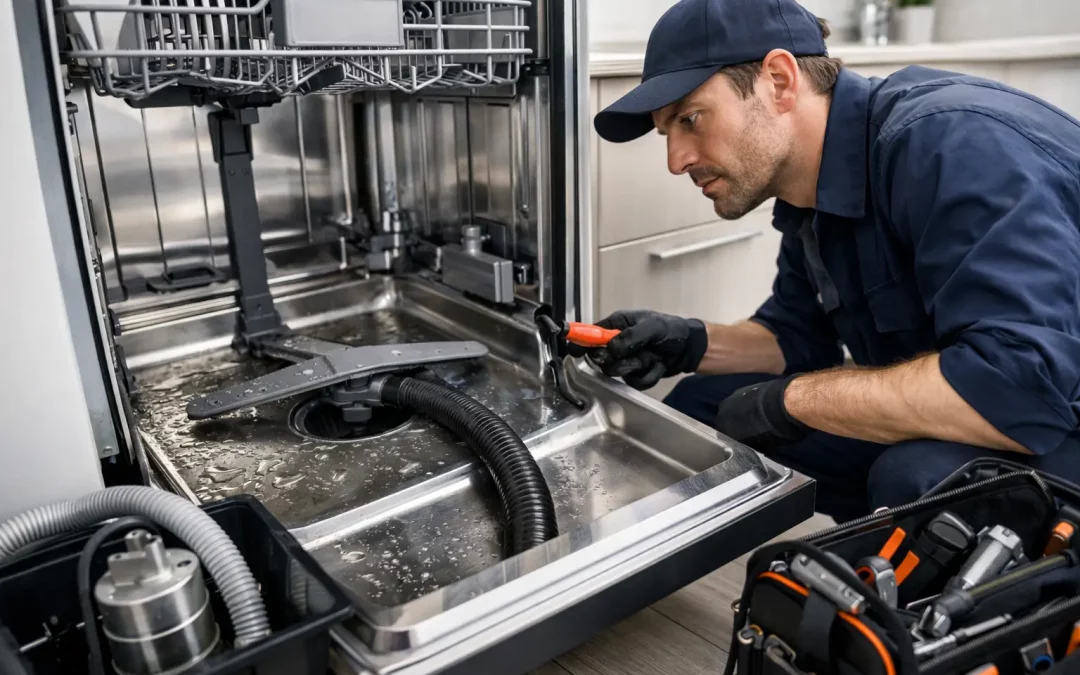
A dishwasher that finishes its cycle with dirty water sitting in the bottom is more than an inconvenience. It can leave dishes unclean, create unpleasant odours, and turn a busy Halifax household routine into a kitchen cleanup job. For dishwasher not draining repair Halifax homeowners need, the right first step is finding out whether the problem is a simple blockage or a part that needs professional attention.
Standing water does not always mean the dishwasher has failed. Food debris, a kinked hose, a clogged sink connection, or a worn drain component can all cause the same symptom. A few safe checks may help, but forcing the issue or repeatedly running the machine can lead to leaks and a larger repair.
What a Dishwasher Should Do at the End of a Cycle
Near the end of a wash cycle, the dishwasher pump pushes used water through the drain hose and into the household plumbing. Depending on the installation, that hose may connect through an air gap, a high loop beneath the counter, or a garbage disposal connection.
If water remains in the tub, the restriction may be inside the dishwasher, in the hose, or farther along in the sink drain. The timing of the issue provides a useful clue. If the dishwasher fills and washes normally but leaves water at the end, the drain path or drain pump is the likely concern. If it stops mid-cycle, makes a humming sound, or displays an error code, an electrical or mechanical issue may also be involved.
A small amount of clean water around the filter area can be normal in some models. Several centimetres of cloudy water across the bottom of the tub is not.
Safe Checks Before You Book Dishwasher Not Draining Repair in Halifax
Start by turning the dishwasher off. If there is a large amount of water in the bottom, remove it carefully with a cup, sponge, or towel so you can inspect the filter and sump area. Avoid using chemical drain cleaners inside the dishwasher. These products can damage seals, hoses, and internal components, and they may create a safety hazard for the technician who later services the unit.
Clean the Filter and Check for Obvious Debris
Most modern dishwashers have a removable filter at the bottom of the tub. Twist or lift it out according to the appliance instructions, then rinse away food particles under warm water. Check the area beneath it for labels, broken glass, bones, twist ties, or other objects that may be blocking water flow.
Do not reach deep into the sump if you cannot clearly see what is inside. Sharp glass and exposed pump parts are possible. If debris is visible but cannot be removed safely, that is a good point to stop and arrange service.
Check the Kitchen Sink and Garbage Disposal
A dishwasher commonly drains through the kitchen sink plumbing. If the sink is slow, backed up, or gurgling, the dishwasher may be unable to drain even when its pump is working properly. Clear the sink drain first using an appropriate plumbing method.
If a garbage disposal was recently installed or replaced, check whether the dishwasher connection knockout plug was removed. A plug left in place blocks the dishwasher drain entirely. This is a common installation issue, especially when a dishwasher problem appears immediately after plumbing work.
Look Under the Sink for a Kinked Hose
Open the cabinet below the sink and inspect the visible drain hose. It should not be crushed behind stored items, bent sharply, or sagging excessively. A hose that is pinched can slow or stop water flow.
It is also worth checking whether the hose is routed in a proper high loop beneath the countertop. This helps prevent dirty sink water from flowing back into the dishwasher. Correcting hose routing can be straightforward, but connections must remain secure. A loose clamp can turn a drainage issue into a cabinet leak.
Common Causes of a Dishwasher That Will Not Drain
The filter is often the easiest culprit, but it is not the only one. A technician diagnoses the entire drain system rather than replacing a part based on one symptom.
A blocked drain pump or pump cover may prevent the impeller from turning. In some cases, the pump hums but cannot move water because a small object is lodged inside. If the pump is silent when the dishwasher should drain, the issue could be a failed motor, damaged wiring, a door-latch problem, or an electronic control fault.
A clogged or deteriorated drain hose can also restrict water flow. Hoses may collect grease and debris over time, and older hoses can split or soften. The check valve, where fitted, may stick open or closed. A stuck valve can allow water to return to the tub after draining or prevent it from leaving properly.
Some drainage complaints are actually related to how the dishwasher is being used. Large food scraps should be scraped into the compost or garbage before loading dishes. Too much detergent can create excess suds that interfere with normal pumping. Regular filter cleaning is particularly helpful for busy family kitchens, rental units, and homes where the dishwasher runs daily.
When a DIY Check Is Not Enough
Book professional service promptly if you notice leaking, a burning smell, repeated error codes, unusual grinding, or a breaker that trips when the dishwasher tries to drain. These signs can point to a failed pump, wiring issue, or water intrusion that should not be handled casually.
It is also time to call when the filter is clean, the sink drain is clear, and water still remains after a cycle. Removing the dishwasher from its opening, disconnecting hoses, and testing electrical components requires the right tools and experience. Built-in units can be heavy, water lines and power connections may be tight, and an incorrect reinstallation can cause hidden damage to flooring or cabinetry.
A trained appliance technician can test whether the drain pump is receiving power, inspect the hose and check valve, clear internal obstructions, and identify whether the control board is sending the proper drain command. That diagnosis matters because replacing a pump will not solve a blocked household drain, and clearing a hose will not fix a failed pump motor.
Is Dishwasher Repair Worth It?
For many Halifax homeowners, repairing a dishwasher is the sensible choice when the unit is otherwise in good condition. Drain pumps, hoses, filters, and related components are often repairable without replacing the entire appliance. The final decision depends on the dishwasher’s age, brand, overall condition, repair cost, and whether other problems are beginning to appear.
If the dishwasher is relatively new and this is its first issue, a targeted repair usually makes practical sense. If it is older and has multiple concerns, such as poor cleaning, recurring leaks, rusted racks, and electronic faults, replacement may be the better long-term investment. An honest technician should explain the findings in plain language and let you decide with clear information.
For landlords and property managers, timely diagnosis can also prevent a minor drainage complaint from becoming water damage, tenant disruption, or an emergency call. Keeping a record of previous repairs helps with future repair-versus-replace decisions.
Fast Local Help for Halifax Homes
A dishwasher full of standing water rarely improves by waiting. Instant Appliance Repair provides in-home dishwasher diagnosis and repair across Halifax Regional Municipality and nearby Nova Scotia communities, with same-day availability when scheduling allows. Completed repairs include a free service call and a 90-day parts-and-labour warranty, so homeowners have clear protection after the work is done.
Before booking, note the dishwasher brand and model number, when the draining problem started, and whether you heard any unusual sounds. That small amount of information helps the technician arrive prepared and keeps the appointment focused on getting your kitchen back to normal.
If the dishwasher is holding water tonight, remove what you can safely, avoid running another cycle, and keep the area beneath the sink clear. A prompt, accurate repair can often be the difference between a simple drainage fix and a much bigger kitchen mess.