A dryer that takes two or three cycles to finish a load is not just frustrating on laundry day. It can be a warning that heat and lint are not moving where they should. Dryer safety comes down to a few practical habits, regular vent care, and knowing when a change in performance needs professional attention.
For homeowners, tenants, landlords, and property managers across Halifax Regional Municipality, an electric dryer is easy to overlook until it stops working. Keeping it safe does not require taking the appliance apart. It does require paying attention to airflow, heat, installation, and the warning signs that should not wait.
Why dryer safety deserves attention
A dryer creates heat, moves air, and collects fibres from clothing in every cycle. That lint is highly flammable. The lint screen catches a large portion of it, but not all of it. Some can build up in the cabinet, exhaust duct, vent hood, and the area behind the appliance.
The biggest risk is restricted airflow. When moist, hot air cannot leave the dryer efficiently, drying times increase and internal components can run hotter than intended. A blocked or poorly installed vent can also put extra strain on the heating system, thermostat, blower, and motor. What begins as a slow-drying problem can turn into an expensive repair or a serious household hazard.
Newer dryers may stop and display an error when airflow is restricted. Older units may simply keep running longer, which means the homeowner has to notice the change. Either way, a load that suddenly needs more than one normal cycle deserves a closer look.
1. Clean the lint screen after every load
This is the simplest and most effective habit. Remove lint from the screen before or after each use, then return the screen fully into place. A clean screen supports better airflow, helps clothes dry properly, and reduces the amount of lint that can enter the vent system.
Every few months, wash the screen with warm water and a mild dish soap, especially if you use dryer sheets or fabric softener. Those products can leave a nearly invisible coating that limits airflow even when the screen looks clean. Let it dry completely before reinstalling it.
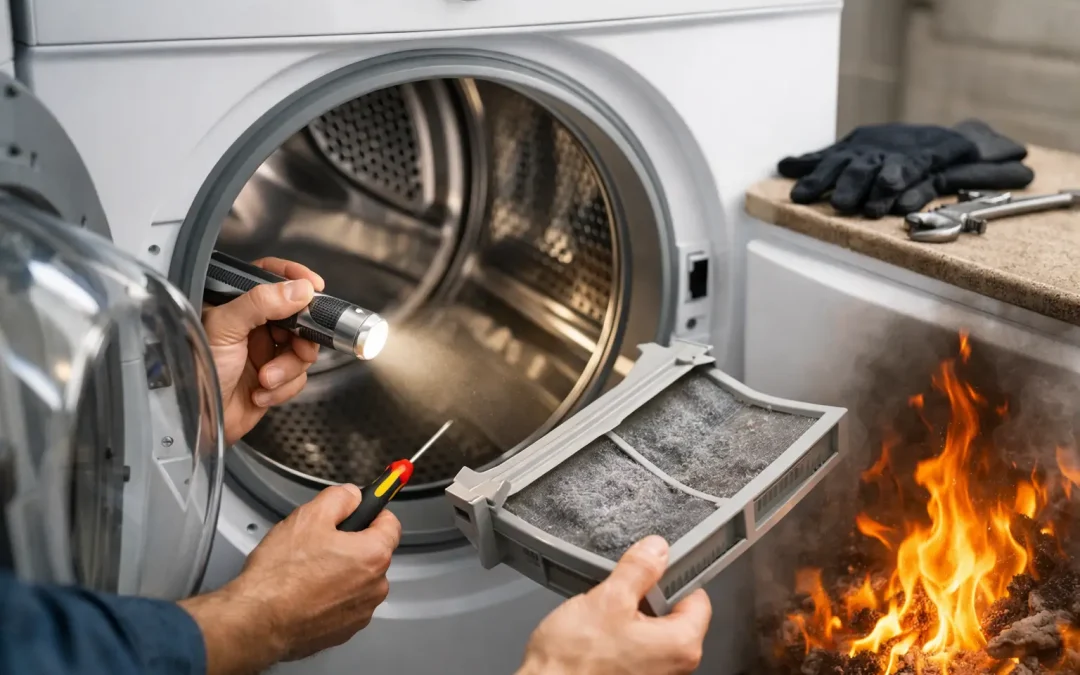
Also look into the lint-screen housing with a flashlight. If lint is packed below the screen, do not force a vacuum hose or sharp tool into the opening. It is easy to damage internal parts or push debris deeper into the dryer. A technician can safely clean areas that are not designed for homeowner access.
2. Treat slow drying as a warning sign
A healthy dryer should dry a normal-sized load in roughly one cycle when the correct setting is used. Heavy towels and bedding can take longer, but a sudden change is not normal. If clothes remain damp, feel unusually hot, or smell musty after a cycle, check the lint screen first and then consider the vent.
Other signs of restricted airflow include excessive heat in the laundry room, condensation near the dryer, a burning smell, or little to no air leaving the exterior vent hood while the dryer is running. Stop using the dryer if you smell burning, see smoke, or hear unusual scraping or thumping. Turn it off, unplug it if it is safe to do so, and arrange for service rather than testing it again.
A hot exterior cabinet can happen during normal operation, but it should not be too hot to touch comfortably. The same goes for the top of the dryer. Heat that feels excessive is worth investigating.
3. Check the outside vent hood
Your exterior vent hood is where warm, moist air leaves the home. While the dryer is operating, the flap or louvers should open freely. When the dryer stops, they should close enough to keep out cold air, pests, and debris.
In Nova Scotia, snow, wind-blown leaves, bird nests, and ice can interfere with this outlet. Check it periodically, particularly after storms and before periods of heavy winter laundry. Clear visible debris around the hood, but do not cover it with screening or a decorative cap that restricts airflow. Fine mesh may seem helpful for keeping pests out, yet it catches lint quickly and can create the very blockage you are trying to prevent.
If the hood does not open during a cycle, there may be a blockage in the duct, a crushed transition hose, or a blower issue inside the dryer. This is a good time to stop using the appliance until the cause is identified.
4. Make sure the vent connection is right
Behind the dryer, the short connection to the wall should be as straight and as short as practical. Kinked, crushed, torn, or sagging ductwork slows air down and creates places for lint to collect. Pushing the dryer too close to the wall is a common cause, especially after moving or cleaning.
A proper metal transition duct is generally the safer choice. Flexible plastic or vinyl ducting can sag, trap lint, and is more vulnerable to heat. Long runs through walls or ceilings need particular care because they are harder to inspect and clean. The best vent layout depends on the home, but fewer bends and a direct route outdoors are usually better.
Never vent an electric dryer into a garage, attic, crawlspace, or indoor room. The moisture can contribute to mould and damage, while lint accumulates where it should not. A vent must exhaust outdoors.
5. Use the dryer the way it was designed to be used
Overloading reduces airflow through clothing and makes the dryer work harder. Leave enough space for fabrics to tumble. Large items such as comforters, sleeping bags, and bulky winter coats may need a commercial machine or a setting recommended in the garment care label.
Clean items that have come into contact with gasoline, solvents, cooking oil, paint thinner, or other flammable substances should not go into a dryer. Washing alone may not remove all vapours or residue. Air-dry them in a safe, well-ventilated area instead, following the product and garment instructions.
Keep the area around the dryer clear. Laundry baskets, cardboard boxes, cleaning supplies, and piles of clothing can restrict ventilation and add fuel if a fire starts. A clear space also makes it easier to spot a loose vent connection or water leak from the washer beside it.
6. Do not leave a questionable dryer running unattended
Many households run laundry overnight or while leaving the house because schedules are busy. A dryer in good condition is built for normal use, but it is safer to run it when someone is home and awake, particularly if it has been drying slowly or making unfamiliar noises.
Pay attention to repeated tripped breakers, flickering lights when the dryer starts, a plug that feels hot, or damage to the power cord. Electric dryers typically require a dedicated high-voltage circuit. Electrical work, outlet replacement, and breaker concerns belong with a qualified electrician. Do not use an extension cord or adapter to make a dryer connection work.
For rental properties, make dryer checks part of routine maintenance rather than waiting for a tenant to report a problem. Clear instructions on lint-screen cleaning and a regular review of the outdoor vent can prevent disruptions and protect the property.
7. Know when a vent cleaning is not enough
A clean vent is essential, but not every drying issue is caused by lint. A failed heating element, faulty thermostat, worn drum support, damaged blower wheel, control problem, or motor issue can affect how a dryer performs. Sometimes the appliance overheats because a safety component is failing. Other times it produces no heat at all.
If the vent is clear but the dryer still takes too long, shuts off early, overheats, trips a breaker, squeals, scrapes, or leaves clothes unusually hot, professional diagnosis is the sensible next step. Continuing to run a malfunctioning appliance can worsen the repair and make it harder to identify the original cause.
8. Build a simple maintenance routine
The right schedule depends on how often you do laundry, how long the vent run is, and whether the household has pets that create extra lint. For most homes, cleaning the lint screen after every load, checking the exterior hood monthly, and arranging periodic vent inspection or cleaning is a practical baseline. High-use households and properties with long or complex duct runs may need more frequent attention.
Keep a note of when drying times change. That small detail helps a technician distinguish between an airflow concern and an appliance fault. It also helps landlords and property managers document maintenance across multiple units.
When a dryer concern interrupts your routine, Instant Appliance Repair can assess electric dryer performance, explain the issue plainly, and complete the repair with care for your home. A prompt check is usually easier than dealing with a dryer that has been pushed past its warning signs.
Your dryer should make laundry simpler, not leave you wondering whether the next cycle is safe. Clear the lint, watch the airflow, and trust your instincts when the appliance starts acting differently.