
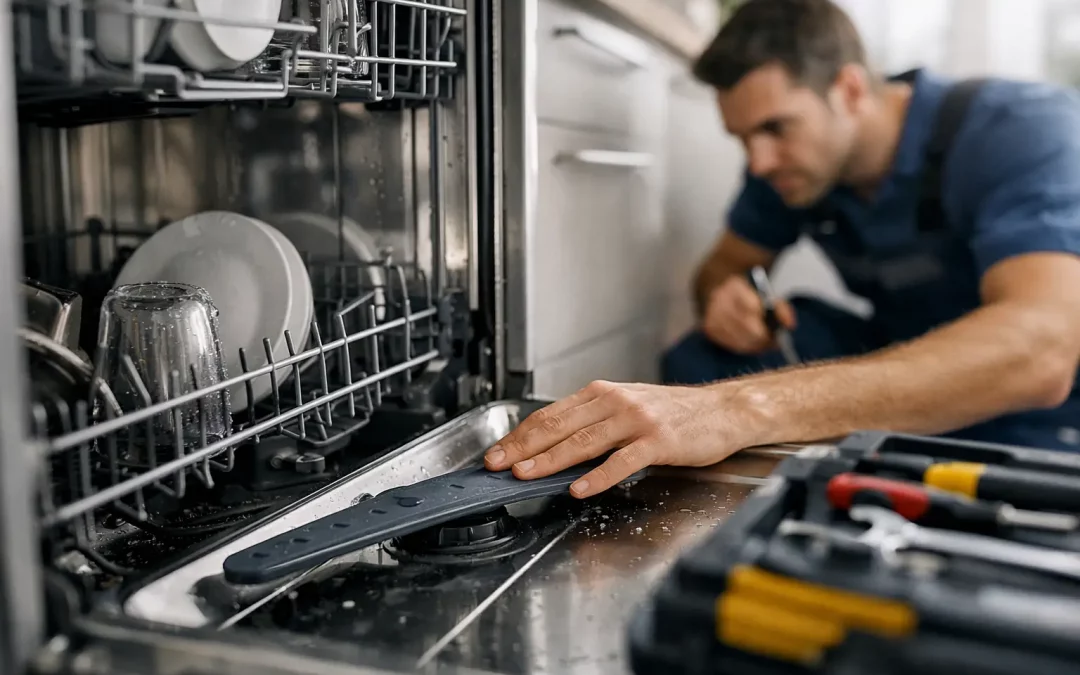
A dishwasher can seem to be working right up until it leaves baked-on food on every plate or pools water across the kitchen floor. Knowing the signs your dishwasher needs service helps you deal with a developing problem before it interrupts meals, damages cabinetry, or turns into a larger repair.
Some issues are simple, such as a blocked filter or a spray arm that needs cleaning. Others point to a failed pump, worn door seal, heating problem, or electrical fault that needs a trained technician. The difference is not always obvious from the outside, which is why early attention can save time and prevent unnecessary damage.
Signs dishwasher needs service: what to watch for
1. Dishes are still dirty after a full cycle
A few crumbs on a plate after a heavily loaded cycle are one thing. Regularly finding greasy film, dried food, cloudy glassware, or detergent residue is another. When the dishwasher is no longer cleaning properly, the cause may be a clogged filter, blocked spray arms, a weak circulation pump, low water flow, or a problem with the detergent dispenser.
Start by checking that large food particles have not collected in the filter and that the spray arms can spin freely. Avoid overloading racks or stacking dishes so closely that water cannot reach them. If cleaning and loading adjustments do not improve results, service is the sensible next step. Re-running every load wastes water, electricity, and your time.
2. Water is left in the bottom of the tub
A small amount of water around the filter area can be normal on some models. Standing water across the bottom of the dishwasher at the end of a cycle is not. It often means the appliance cannot drain as it should.
Food debris in the filter, a kinked drain hose, a blocked air gap, or a drain pump issue can all be responsible. Do not keep running cycles in the hope that the water will clear itself. If water is backing up into the dishwasher, or leaking from underneath, stop using it until the source is identified.
3. The dishwasher leaks onto the floor
A leak deserves quick attention, even if it only appears as a small puddle near the door. Water can travel under flooring, into cabinets, or through a ceiling below the kitchen before the visible damage becomes clear.
Common causes include a worn or dirty door gasket, a damaged hose, a loose connection, an overfill issue, or a cracked component inside the tub. Check whether a dish or utensil is preventing the door from closing properly. If the door closes normally and the leak returns, arrange service rather than risking water damage.
4. It makes new or unusually loud noises
Dishwashers make some normal operating sounds: water moving, a quiet motor hum, and occasional clicks as the cycle changes. Grinding, banging, squealing, repeated knocking, or a loud buzzing sound is different.
A utensil can sometimes fall through the rack and strike a spray arm, so inspect the interior first. If nothing is obstructing the moving parts, the noise may be coming from the wash motor, pump, bearings, or another component that is wearing out. Catching that issue early may prevent a complete failure during a busy week.
5. The door will not latch or stay closed
A dishwasher that will not start may have a simple door-latch problem rather than a major electronic failure. The appliance needs to confirm the door is closed before it can safely fill and run.
Look for a rack that is not pushed in fully or an item pressing against the door. If the latch feels loose, the door must be lifted to close, or the cycle stops because the door pops open, it needs attention. Forcing the door can bend hinges, damage the latch further, and turn a manageable repair into a more costly one.
6. Your dishes are wet and the tub stays cold
Most dishwashers use heat during washing or drying. If dishes consistently come out cold, dripping wet, or covered in a chalky residue, the heating system may not be doing its job. You may also notice that a cycle finishes much sooner than expected or that plastic containers are wetter than usual.
Rinse aid and dishwasher settings can affect drying performance, particularly on energy-saving cycles. However, a complete loss of heat can point to a heating element, thermostat, sensor, wiring, or control issue. This is worth diagnosing properly, especially if the appliance is also leaving food behind.
7. The dishwasher smells bad even after cleaning
A stale or sour smell often starts with trapped food in the filter, drain area, or door seal. Cleaning those areas regularly is part of normal dishwasher care. But if odours return soon after cleaning, there may be a drainage problem allowing dirty water to remain in the appliance.
Check the filter according to your manufacturer’s instructions and wipe the gasket carefully. Run the kitchen sink before starting the dishwasher if both connect to the same drain system. Persistent odours, slow draining, or dirty water returning to the tub are signs that a service visit is a better answer than adding more cleaning products.
8. Buttons, lights, or cycle times behave unpredictably
A flashing light or error code is your dishwasher’s way of reporting that something is wrong. It may be responding to a water supply issue, drain fault, heating issue, door switch problem, or electronic control concern.
Try the basic steps first: check that the dishwasher has power, confirm the water supply valve is open, and clean the filter. A reset can help on some models, but repeatedly resetting an appliance without finding the cause can mask a fault. If the same code returns, the display goes blank, or cycles stop midway through, professional diagnosis can prevent guesswork and unnecessary parts replacement.
9. Your utility use has increased or cycles take far too long
A dishwasher that runs for two or three hours may be operating normally on certain modern eco cycles. Those cycles use less water and rely on longer wash times to do the job. The concern is a sudden change: a familiar cycle now takes much longer, pauses repeatedly, or seems unable to finish.
Problems with water temperature, filling, draining, sensors, or the control board can affect cycle length. If your water or electricity use rises at the same time, do not assume it is just an inconvenient setting. A technician can determine whether the appliance is functioning as designed or compensating for a failing part.
When to stop using the dishwasher immediately
Turn the dishwasher off and avoid using it if you see active leaking, smell burning, notice smoke, find a damaged power cord, or hear severe grinding. If water is close to an electrical connection, do not touch the appliance or attempt to take it apart. Shut off power at the breaker only if it is safe to do so, then arrange qualified service.
A dishwasher that trips the breaker also needs prompt attention. Resetting the breaker once may be reasonable after confirming there is no water leak or burning smell. If it trips again, stop using the appliance. Electrical faults are not a do-it-yourself test.
Repair or replace: the practical question
Not every dishwasher problem means replacement is the best choice. A clogged drain path, door seal, latch, pump, heating component, or dispenser can often be repaired, particularly when the machine has otherwise been reliable. Built-in models can also involve installation work, cabinetry fit, and plumbing connections, so replacement has costs beyond the price of the appliance.
Age, condition, repair cost, and the availability of parts all matter. An older dishwasher with repeated failures may be nearing the point where replacement makes more sense. A newer model with one clear fault is often worth repairing. An honest diagnosis should give you enough information to make that decision without pressure.
For homeowners and property managers across Halifax Regional Municipality and nearby Nova Scotia communities, prompt help can keep a small dishwasher issue from becoming a kitchen disruption. Instant Appliance Repair provides in-home diagnosis with practical advice, and completed repairs are backed by a 90-day parts-and-labour warranty. If your dishwasher is showing one of these warning signs, arranging service while it still runs may be the easiest way to protect your kitchen and get back to clean dishes.