
A cake that is browned on the outside but wet in the centre is frustrating. So are cookies that burn on one tray and stay pale on another. Often, the problem is not your recipe or baking skills. Oven calibration may be needed because the temperature shown on the control panel does not match the heat inside the oven.
A small temperature difference can change the result of a meal. A 10°C variation may not ruin every weeknight dish, but it can make a real difference with baking, roasting, casseroles, and food that must reach a safe internal temperature. The good news is that many temperature concerns can be checked clearly before deciding whether an adjustment or repair is required.
What oven calibration actually means
Oven calibration is the process of comparing the selected temperature with the oven’s actual average cooking temperature, then adjusting the control setting when necessary. For example, if you set an oven to 180°C but it consistently cooks closer to 165°C, the calibration setting may be adjusted so future cycles reach the intended heat.
This does not mean the oven will hold one exact temperature every second. Household ovens normally cycle above and below the selected temperature. The heating elements turn on, the oven warms slightly past the target, then the elements turn off until the temperature drops and the cycle starts again. What matters is the average temperature over time.
That distinction helps prevent unnecessary repairs. Seeing a brief temperature swing on a thermometer is normal. Consistently cooking 15°C to 25°C too hot or too cool is worth investigating.
Signs your oven may be running hot or cold
Temperature problems often show up in repeatable patterns. If the same recipe has worked for years but suddenly produces uneven results, pay attention to what is changing. A too-hot oven may scorch the bottoms of cookies, dry out roasts, brown food before it cooks through, or cause cakes to rise quickly and collapse.
An oven that runs cool can leave baking underdone, extend cooking times, and make it difficult to crisp foods. You may also notice that frozen meals need much longer than their package instructions suggest. Since recipes and package times are only guidelines, one imperfect meal is not proof of a faulty oven. Several similar results are a stronger clue.
Uneven cooking can point to a different issue. If one side of the oven is consistently hotter, if the top browns far faster than the bottom, or if one rack position performs poorly, the cause may be an element, fan, door seal, rack position, or airflow problem rather than a simple calibration setting.
How to check oven temperature at home
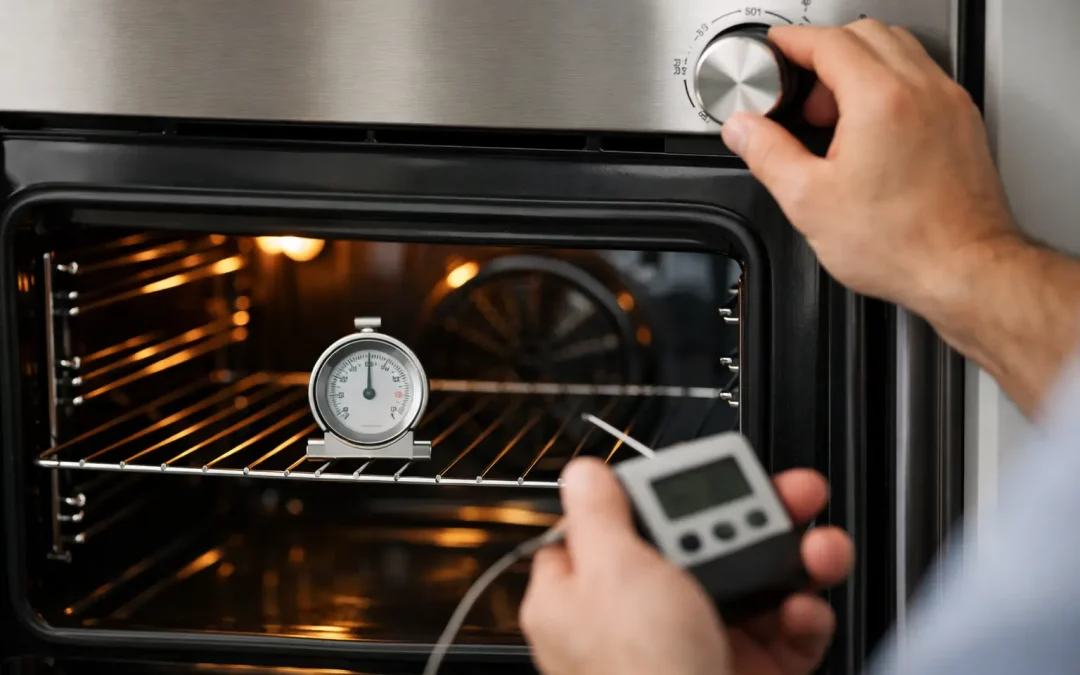
A careful home test can give you useful information when booking service. Start with an oven thermometer rated for oven use. Place it near the centre of the middle rack, away from the oven walls and not directly above or below an element.
Set the oven to a common baking temperature, such as 180°C, and allow it to fully preheat. Then leave the door closed and watch the thermometer through the window if possible. Record the temperature at regular intervals for 20 to 30 minutes after preheating. Because the oven cycles, do not rely on the first number you see.
Look for the average rather than the high or low point. If the readings repeatedly average near the selected temperature, the oven is likely heating normally. If they are consistently off by a noticeable amount, write down the selected setting, the readings, and whether the issue happened in bake, convection bake, or broil mode.
An inexpensive dial thermometer can be helpful, but it is not perfect. It may react slowly and can be inaccurate itself. A technician uses more precise testing equipment and checks the oven’s cycling behaviour, not just one reading. Still, your notes can make diagnosis faster and more straightforward.
Test with a familiar recipe too
A thermometer tells part of the story. Baking a recipe you know well can confirm whether the concern is consistent. Use the same pan type, rack position, and temperature you have used successfully before. Dark pans, crowded racks, glass bakeware, and frequent door opening can all alter cooking results, even when the oven is operating correctly.
When a calibration adjustment may solve the problem
Many modern electric ranges and wall ovens have a user-accessible calibration feature in the settings menu. Depending on the model, it may be called temperature offset, oven adjustment, temperature correction, or calibration. The owner’s manual will explain the available range and the exact steps.
A modest adjustment can be appropriate when the oven heats evenly but consistently averages a little high or low. Make small changes, usually 5°C at a time, then test again with a familiar recipe. A large correction made all at once can create a new problem and make it harder to tell what changed.
Calibration is also not a substitute for safe cooking. When preparing poultry, meat, leftovers, or other foods that require a safe internal temperature, use a food thermometer. The oven display and an oven thermometer cannot tell you whether the centre of the food is done.
When oven calibration will not fix it
If the temperature is far off, fluctuates unpredictably, or has changed suddenly, a component may need professional diagnosis. Common causes include a weakened bake or broil element, a faulty temperature sensor, damaged wiring, a failing control board, or a worn oven door gasket that allows heat to escape.
A convection oven adds another variable. If the fan is not circulating air properly, foods may cook unevenly even though the average temperature is close to correct. Likewise, an oven that takes an unusually long time to preheat may have an element or electrical issue rather than a calibration problem.
Watch for warning signs that should not be ignored: a burning smell beyond normal first-use odours, visible sparking, tripped breakers, an element with blisters or breaks, error codes, or a door that will not close properly. Turn the oven off and arrange service rather than continuing to test it.
Avoid taking apart the control panel or trying to bend, remove, or replace electrical components without the proper training. Oven repairs involve high voltage and parts that can remain hot long after use. A correct diagnosis protects both the appliance and your home.
What a technician checks during an oven temperature visit
Professional diagnosis starts with the symptom, not an assumption. A technician will ask how the oven behaves, which cooking modes are affected, whether preheating has changed, and whether the issue is constant or intermittent. They can then test the temperature sensor, heating elements, wiring connections, control response, and door seal.
This matters because replacing a part without testing can waste money. A sensor may appear to be the obvious cause, for instance, while the real issue is an element that does not heat consistently or a control board that is not regulating the cycle properly.
For homeowners in Halifax Regional Municipality and nearby Nova Scotia communities, Instant Appliance Repair can assess oven temperature concerns in your home, explain the findings in plain language, and recommend the practical next step. If a repair is completed, the free service call and 90-day parts-and-labour warranty provide added peace of mind.
Keep your oven cooking consistently
A few everyday habits can help preserve oven performance. Keep spills from building up around the door and oven floor, check that the door closes fully, and avoid lining the bottom of the oven with foil unless the manufacturer specifically permits it. Foil can block airflow, reflect excessive heat, and damage some finishes or heating systems.
Use the middle rack as your default for baking, leave space around pans for air circulation, and avoid opening the door repeatedly while food cooks. If your oven has convection, follow recipe guidance carefully because many dishes require a lower temperature or shorter cook time in that mode.
When meals start coming out differently, trust the pattern rather than blaming yourself after one bad batch. A simple temperature check can tell you whether a small oven calibration adjustment is reasonable or whether it is time to have the appliance properly diagnosed before the next family dinner is on the line.