
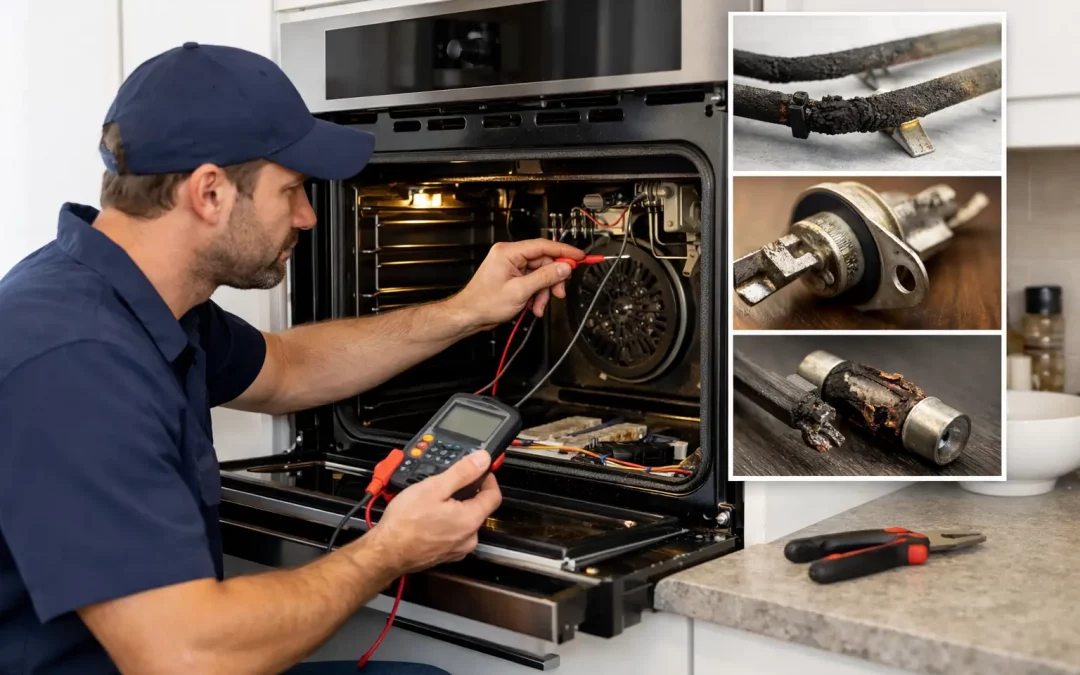
A wall oven can look completely normal – display lit, fan running, timer counting down – while dinner remains stubbornly raw. When that happens, wall oven not heating repair starts with identifying what the oven is actually doing. Does it stay cold? Does it warm slightly but never reach temperature? Does broil work while bake does not? Those details point to different faults and help avoid replacing parts that are not the problem.
For homeowners across Halifax Regional Municipality, a non-heating oven is more than an inconvenience. It can disrupt family meals, holiday plans, tenants, or a busy weeknight routine. A few safe checks may reveal a simple issue. For electrical or internal component faults, a qualified appliance technician can diagnose the cause properly and explain whether repair makes practical sense.
Start With the Safe, Simple Checks
Before assuming the oven needs a major repair, confirm that it is set to a cooking mode and temperature, rather than delay start, keep warm, or a timed cooking setting. Cancel the cycle, select Bake, set a temperature such as 350°F, and allow several minutes for heating to begin. The oven cavity will not feel hot immediately, so give it a little time.
Next, check the household electrical panel. Most electric wall ovens use a 240-volt circuit with a double-pole breaker. A breaker can trip only partly, leaving enough power for the clock, light, and control display but not enough for the heating elements to operate correctly. Turn the oven breaker fully off, then firmly back on. If it trips again, do not continue resetting it. That can signal a wiring, component, or circuit problem that needs professional attention.
If the oven has just completed a self-cleaning cycle, make sure the door has fully unlocked and the controls have returned to normal operation. High heat during self-clean can expose a weak thermal fuse, door-lock component, or control board. Avoid running self-clean again until the oven is working reliably.
Common Wall Oven Not Heating Repair Causes
1. A failed bake element
In many electric wall ovens, the bake element is the most common reason for poor or absent heating. It is usually located along the bottom of the oven cavity, although some models conceal it beneath a lower panel. A damaged element may show blistering, cracks, burn marks, or a visible split. It may also fail without obvious signs.
When the bake element fails, the oven may heat very slowly, cook unevenly, or stay cold in Bake mode. Broil may still work because it uses a separate upper element. Replacing an element is often a straightforward repair, but diagnosis matters. A new element will not solve the issue if the control board is not supplying power to it.
2. A failed broil element
The broil element sits at the top of the oven and is used for broiling, but it also assists preheating on many models. If it is damaged, preheat may take far too long or the oven may struggle to maintain temperature. A failed broil element is particularly likely when Bake works somewhat but broil does not heat at all.
Do not touch or attempt to remove an element while power is connected. Wall ovens carry high voltage, and internal terminals can remain hazardous even when the appliance appears off.
3. A faulty temperature sensor
The oven temperature sensor is a slim metal probe inside the cavity, usually mounted near the rear wall. It tells the electronic control how hot the oven is. If it sends an inaccurate reading, the oven may stop heating too soon, overheat, or display an error code.
A common complaint is, “The oven says it is preheated, but the food takes much longer than usual.” An inexpensive oven thermometer can help confirm that the actual temperature is significantly different from the setting. Small temperature swings are normal, but a consistent difference of 25°F or more deserves attention.
4. A control board or relay problem
The electronic oven control board manages heating cycles, temperature input, timers, and display functions. Relays on the board send power to the bake and broil elements. If a relay fails, the display may appear to work normally even though an element receives no power.
Control-board repairs require accurate testing. Symptoms can overlap with a bad element or sensor, and replacing a board based on guesswork can be costly. A technician can check the heating circuit, sensor readings, and voltage supply before recommending a part.
5. A blown thermal fuse or safety thermostat
Many wall ovens include a thermal fuse or high-limit thermostat designed to interrupt power if the appliance overheats. Restricted ventilation, a cooling fan issue, or heat from a self-clean cycle can trigger or damage this safety component. Depending on the oven design, the result may be a completely dead oven or an oven that powers on but will not heat.
This is not a part to bypass. The safety device exists to prevent dangerous overheating. The underlying cause must be found before the oven is put back into service.
6. Loose or damaged wiring
Heating elements draw substantial current. Over time, terminals and wiring connections can become loose, corroded, or heat-damaged. A burnt connector can prevent an element from receiving power and may leave a noticeable electrical smell or discolouration around a terminal.
Turn the oven off at the breaker and leave it off if you notice burning odours, sparks, smoke, or repeated breaker trips. These are reasons to arrange service promptly rather than trying another cooking cycle.
7. A door lock or cooling fan issue
Some wall ovens will limit or prevent heating if the control believes the door is locked, the latch is out of position, or the cooling system is not operating as expected. This is more common after self-cleaning or when an error code appears. The exact fix depends on the model, which is why the code and appliance model number are useful information to have when booking service.
What You Can Check Without Taking the Oven Apart
Homeowners can safely observe the oven’s behaviour, reset a tripped breaker once, inspect visible elements for damage, and compare actual temperature with an oven thermometer. It also helps to write down any error code, unusual sound, burning smell, or whether Bake and Broil work differently.
Avoid removing built-in oven panels, testing live electrical connections, or replacing internal electrical parts without the proper training. Wall ovens are heavy, hard-wired in many installations, and connected to high-voltage circuits. A repair that begins as a simple element replacement can become unsafe if a terminal is damaged or the unit is not supported correctly when pulled from the cabinet.
Repair or Replace: What Makes Sense?
A failed element, sensor, fuse, or door-lock component is often worth repairing, especially when the wall oven is otherwise in good condition. Built-in appliances are expensive to replace because installation may involve cabinet sizing, electrical work, trim adjustments, and matching other kitchen appliances.
The decision changes when an older oven needs a costly control board, has multiple recurring failures, or has parts that are no longer available. Age alone is not the deciding factor. The better question is whether the repair restores dependable service for a reasonable cost compared with replacement and installation.
A clear diagnosis should come before that decision. Instant Appliance Repair provides in-home wall oven diagnosis for homeowners who want a practical explanation, not a rushed guess. With a completed repair, the service call is free, and parts and labour are backed by a 90-day warranty.
When to Book Professional Service
Book a wall oven repair appointment when the breaker is not the issue, the oven will not heat after basic checks, food is consistently undercooked, an error code remains on the display, or you see damage to a heating element. Prompt service is especially sensible before a holiday, family gathering, or move-in date.
When you book, have the oven brand, model number, and a short description of the symptoms ready. Mention whether the oven heats in Bake, Broil, or neither setting, and whether the issue started after a power outage or self-clean cycle. That information helps the technician arrive prepared and gets your kitchen back to normal sooner.
A wall oven that is not heating rarely fixes itself, but it does not automatically mean replacement. Shut off power if there are signs of electrical damage, use the safe checks above, and arrange a proper diagnosis before the next meal depends on it.