A freezer full of soft ice cream or thawing food is more than an inconvenience. It can mean wasted groceries, a disrupted household routine, and a problem that gets more expensive if it is left alone. Searching for “freezer not freezing repair Halifax” often happens when the warning signs are already clear: the motor seems to run, the light is on, but the freezer is warmer than it should be.
Before moving food, changing settings, or trying a repair yourself, take a moment to protect what is inside and narrow down the problem. Some freezer issues have a simple cause. Others need a qualified technician to diagnose the cooling system, electrical components, or air circulation safely.
Start with food safety, not the appliance
A properly operating freezer should hold food at about -18 C. If you have a thermometer and the temperature has climbed above that point, avoid opening the door repeatedly. Every open door lets in warm, humid Halifax air and makes the unit work harder to recover.
Food that still contains ice crystals or has stayed at 4 C or colder may often be safely refrozen, although its quality can decline. Perishable food that has fully thawed and sat above 4 C for more than two hours should be discarded. When in doubt, do not rely on smell or taste alone to decide whether food is safe.
If the freezer is warming quickly, transfer food to a cooler with ice packs or to a neighbour’s freezer if possible. This gives you time to assess the appliance without turning a small issue into a full freezer loss.
Check these common causes first
Not every freezer that stops freezing has a failed compressor. A few practical checks can identify problems that do not require a major repair.
Make sure the controls have not changed
A temperature dial can get bumped while loading groceries or cleaning. Set the freezer to its normal recommended setting and allow several hours for it to stabilize. If the unit was recently unplugged, moved, or installed, it may need additional time before it reaches its set temperature.
Also check whether a vacation, energy-saving, or cooling-off mode has been activated. These settings vary by model, but they can reduce cooling or stop the compressor from running as expected.
Look for blocked airflow and overloaded shelves
Cold air has to circulate through the freezer compartment. Boxes pushed against vents, overfilled shelves, or large items placed in front of air channels can create warm spots even when the appliance is technically running.
Rearrange food so vents are clear and avoid packing items tightly against the back wall. A freezer works best when it is reasonably full but not jammed. Frozen food helps hold temperature, while enough open space allows air to move.
Inspect the door seal
A worn, dirty, or torn gasket lets warm air enter continuously. You may notice frost around the door frame, moisture inside the compartment, or a door that does not close with a firm seal.
Wipe the gasket and the contact surface with warm water and mild soap, then dry both thoroughly. Check for cracks, gaps, or sections that have pulled loose. A damaged seal is often repairable, but it should not be ignored. Warm air entering through the door can cause frost buildup and place unnecessary strain on the cooling system.
Check power and ventilation around the appliance
Confirm that the freezer is plugged in securely and that the outlet has power. If it is on a tripped breaker or a power bar, restore power only after checking for an obvious issue. Never keep resetting a breaker that trips again.
For a standalone freezer or refrigerator-freezer, make sure there is adequate room around the appliance for heat to escape. Dusty condenser coils, blocked vents, or an appliance pressed tightly into cabinetry can reduce performance. If you can safely access the coils, gentle vacuuming with the appliance unplugged may help. Built-in units and tight installations are different – forcing access panels or moving heavy appliances can cause damage.
Signs the freezer needs professional repair
If the simple checks do not restore freezing, the problem may be inside the appliance. Modern freezers rely on several connected parts: a compressor, fans, electronic controls, sensors, a defrost system, and a sealed refrigerant system. The symptom can look the same from the outside, even when the underlying cause is very different.
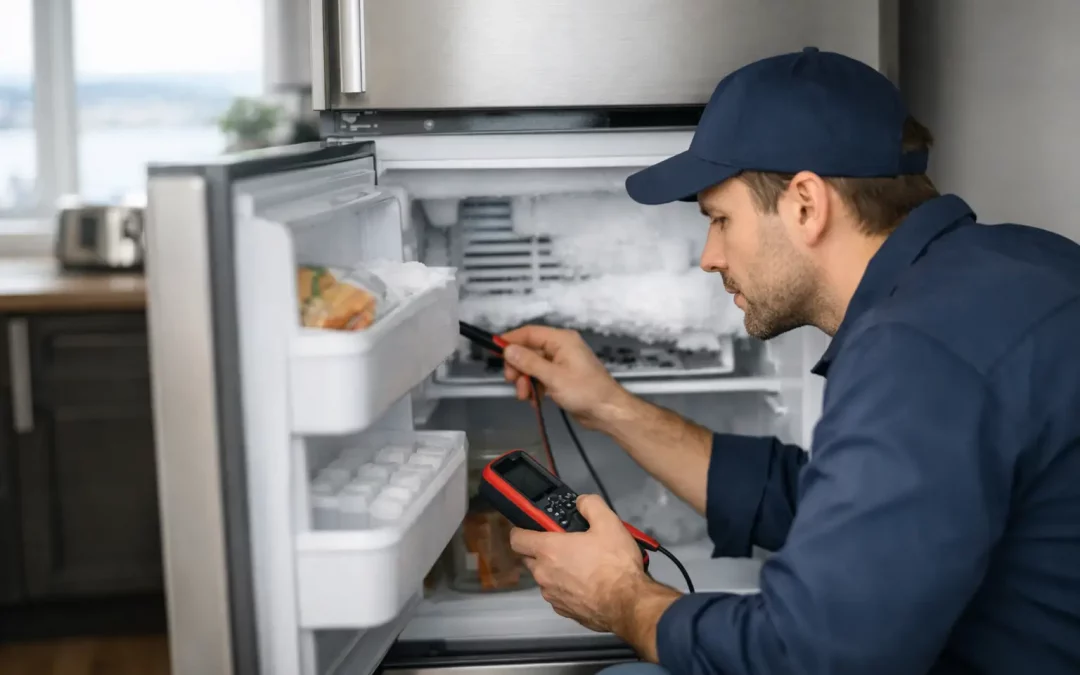
A freezer that is running but not cold may have dirty coils, a failed evaporator fan, a faulty start relay, or a compressor problem. If you hear clicking every few minutes without normal cooling, the start components or compressor may need attention. A freezer that has a thick sheet of frost on its back interior panel may have a defrost failure that is blocking airflow.
On refrigerator-freezer combinations, one compartment can sometimes stay cold while the other warms up. That does not necessarily mean the issue is minor. Airflow dampers, fans, sensors, and ice buildup can prevent cold air from reaching the freezer properly.
Call for service promptly if you notice burning smells, repeated breaker trips, a hot electrical cord, loud grinding, water leaks near electrical connections, or a sudden loss of cooling after the appliance has been operating normally. Unplug the unit if it appears unsafe, but avoid taking apart electrical or sealed-system components yourself.
What a freezer repair visit should determine
A proper diagnosis is more than replacing the first part that looks suspicious. A technician should check the temperatures, airflow, fan operation, defrost function, door seal, control response, and compressor starting system before recommending a repair.
For example, frost buildup may point to a defrost heater, thermostat, sensor, control board, or door-seal issue. Replacing only one part without confirming the cause can leave the original problem unresolved. Similarly, a warm freezer may need a relatively straightforward fan motor or relay, but a sealed-system issue can be more involved and should be assessed carefully.
Instant Appliance Repair provides in-home freezer and refrigerator service across Halifax Regional Municipality and nearby Nova Scotia communities, with clear explanations before work moves ahead. For homeowners, landlords, and property managers, that means knowing what failed, what the repair involves, and whether the appliance is a sensible candidate for repair.
Repair or replace? The answer depends
Age matters, but it is not the only factor. A well-maintained freezer with a failed fan, gasket, thermostat, relay, or defrost component is often worth repairing. These parts can restore dependable performance without the cost and inconvenience of replacing the whole appliance.
Replacement may make more sense when an older appliance has a major compressor or sealed-system failure, especially if it has already required several repairs. Parts availability also matters. Some older models are still excellent machines, while others have discontinued components that make a lasting repair difficult.
Consider the full picture: the appliance’s age and condition, the repair estimate, its energy use, whether it meets your household’s capacity needs, and how long you expect to stay in the home. An honest technician should explain the trade-off rather than push a repair that does not make financial sense.
Prevent the next freezer failure
A little routine care can prevent many common cooling and airflow issues. Keep the door gasket clean, avoid blocking interior vents, and do not leave the door open while organizing food. Check the temperature occasionally with an appliance thermometer, especially during summer heat, power interruptions, or after loading a large grocery order.
Vacuum accessible condenser coils periodically if your model has them, and leave proper clearance around the appliance. If frost begins building up unusually fast or the freezer starts running constantly, arrange service before it stops freezing completely.
When your freezer cannot keep food frozen, acting early protects both your groceries and the appliance. Clear the vents, check the seal and settings, keep the door closed, and get professional help when cooling does not return. A timely diagnosis can often turn a stressful kitchen problem into a straightforward repair.