
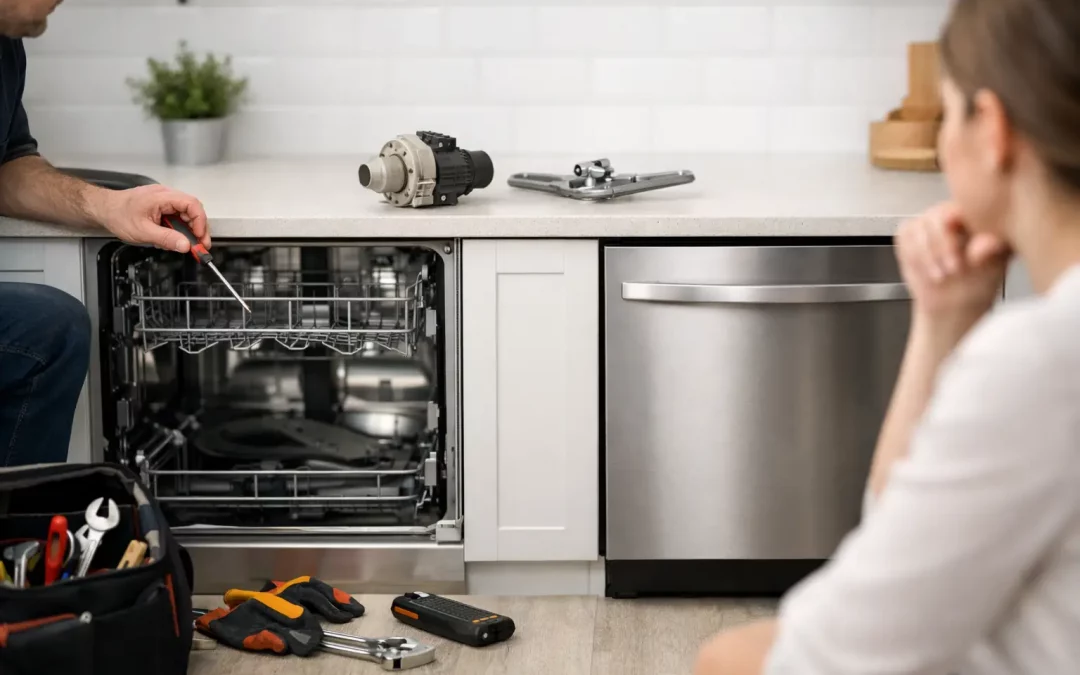
A dishwasher that stops draining the night before guests arrive can make the repair versus replace dishwasher decision feel urgent. Before shopping for a new machine or giving up on the old one, get a clear diagnosis. Many common dishwasher problems come from a worn but replaceable part, while others point to a unit nearing the end of its useful life.
For homeowners across Halifax Regional Municipality and nearby Nova Scotia communities, the best answer usually comes down to five practical factors: the dishwasher’s age, the confirmed fault, the repair estimate, its overall condition, and how reliably it has served your household.
Start With the Dishwasher’s Age
Most residential dishwashers last about 9 to 12 years with normal use and reasonable maintenance. A premium model that has been cared for may last longer, while a lower-cost machine that runs daily in a busy family home may wear out sooner.
Age is useful context, but it is not the whole decision. A six-year-old dishwasher with a failed circulation pump may still be a sensible repair. A 12-year-old unit with rusted racks, recurring leaks, poor cleaning, and an expensive control board problem may be better replaced.
Think about the appliance as a whole. If it has been quiet, cleans well, and has needed little service until now, one repair can often buy several more useful years. If one issue seems to follow another, replacement becomes easier to justify.
Repair Versus Replace Dishwasher: The Cost Test
A common rule is to consider replacement when a repair will cost about 50 percent or more of the price of a comparable new dishwasher. It is a helpful starting point, not a hard rule.
For example, a $250 repair on a dishwasher that would cost $900 to replace may make good financial sense, especially if the appliance is only five years old. That same $250 repair on a 12-year-old dishwasher that already has a noisy motor and damaged door seal deserves more caution.
Do not compare the repair only with the sale price of a basic new model. Replacement can also include delivery, installation, removal of the old unit, new hoses or fittings, and possible cabinet or electrical adjustments. A lower-priced dishwasher is not always the lower-cost option once the full job is considered.
A professional technician can identify whether the problem is isolated or part of broader wear. That distinction matters more than guessing based on a blinking light or an error code.
Problems That Are Often Worth Repairing
Many dishwasher faults are repairable without replacing the entire appliance. A dishwasher that will not drain may have a blocked drain path, a failing drain pump, or a stuck check valve. A machine that fills but does not wash properly may need a circulation pump, spray arm, water inlet valve, or heating-related repair.
Door latch issues, worn gaskets, broken rack wheels, dispenser problems, and damaged hoses are also commonly repaired. These parts can cause major frustration but do not necessarily mean the dishwasher itself has failed.
Poor cleaning results do not always require a repair at all. Clogged spray-arm holes, a dirty filter, incorrect detergent use, or low water temperature can leave dishes dirty even when the main components are working. A technician can rule out these simpler causes before recommending parts.
If the dishwasher is under eight years old and the rest of the machine is in good shape, repairing a single failed component is often the practical choice.
When Replacement Is Usually the Better Call
Replacement becomes more attractive when the dishwasher has several costly problems at once or when a major component fails late in the appliance’s lifespan. The tub is especially important. A cracked tub, severe rust, or a persistent leak around the tub area can turn a repair into a poor long-term investment.
An electronic control board can also be a difficult decision. These boards may be expensive, and availability varies by brand and model. If the dishwasher is older, has a history of faults, and needs a control board, putting that money toward a new unit may offer better value.
Consider replacing if you are dealing with any of these situations:
- Repeated leaks or water damage around the dishwasher
- A cracked, rusted, or badly damaged tub
- Multiple failing parts in the same service visit
- A major repair on a dishwasher around 10 years old or older
- Parts that are discontinued or difficult to source
A leak should never be ignored while you decide. Water can damage flooring, cabinetry, and subfloors, and an electrical appliance near standing water needs prompt attention. Turn off the dishwasher and its water supply if it is actively leaking, then arrange service.
Efficiency Matters, but It Is Not Everything
Newer dishwashers can use less water and electricity than older models. They may also offer quieter operation, adjustable racks, better drying features, and cycles designed for quick loads or heavy cookware. For a household that runs the dishwasher every day, those improvements can add meaningful convenience over time.
Still, energy efficiency alone does not always justify replacing a working appliance. The savings from a newer model can take years to outweigh the cost of buying and installing it. If an older dishwasher is otherwise dependable and needs a modest repair, keeping it in service can be the more sensible and less wasteful choice.
Noise is another personal factor. A dishwasher that has become noticeably louder may have a pump or motor issue, but some older units were simply built with higher operating noise. If a quiet kitchen matters to your family, replacement may be worthwhile even when repair remains possible.
Get the Diagnosis Before Making the Decision
Dishwashers can show similar symptoms for very different reasons. Standing water may be caused by a clogged filter, a blocked drain hose, a drain pump fault, or an issue with the kitchen sink drain connection. Dishes that come out cold and wet may involve the heating element, thermostat, control board, or even the selected cycle.
This is why a proper in-home diagnosis is valuable. It helps avoid spending money on an unnecessary part or replacing a machine that could have been repaired affordably. It also gives you a repair estimate based on the actual fault, rather than an assumption.
At Instant Appliance Repair, the technician can explain the issue in plain language, outline the practical options, and help you weigh the expected repair against the age and condition of your dishwasher. Completed repairs include a free service call and a 90-day parts-and-labour warranty, giving homeowners more confidence in the choice to repair.
A Few Checks You Can Make Safely
Before booking service, you can check a few simple items without taking the appliance apart. Confirm that the dishwasher has power and that the door closes firmly. Clean the filter according to the manufacturer’s instructions, and look for visible food debris in the bottom of the tub. Check that the kitchen sink is draining normally, since some dishwasher drain lines connect through the sink plumbing.
Do not force the door, bypass safety switches, or work on wiring. Avoid using chemical drain cleaners in the dishwasher, too. They can damage seals and components, create a safety concern, and make professional service more difficult.
If you notice a burning smell, smoke, repeated tripping of a breaker, or water pooling on the floor, stop using the dishwasher. Those symptoms call for prompt professional attention rather than another wash cycle.
Make a Choice You Will Feel Good About
The right decision is not always the cheapest option today. Repair is often the better route when the dishwasher is relatively young, the fault is isolated, and the machine has been dependable. Replacement is usually wiser when it is old, leaking, heavily worn, or facing a major repair with little confidence left in the rest of the appliance.
A clear diagnosis turns an inconvenient breakdown into a straightforward household decision. Whether your dishwasher needs one reliable repair or it is time to plan for a new unit, acting before a small problem becomes water damage will protect your kitchen and your budget.