A pan of lasagna that stays cold in the middle, cookies that brown on one side only, or a broiler that will not heat can quickly derail supper. Oven element replacement is often the answer for an electric oven with a failed heating element, but it should follow a proper diagnosis. The visible element may be the problem, or the fault may sit with the temperature sensor, wiring, control board, or power supply.
For homeowners across Halifax Regional Municipality, the practical question is simple: can this oven be repaired safely and affordably, or is it time to consider another option? In many cases, replacing a failed element is a straightforward repair that can add useful years to an otherwise dependable appliance.
When oven element replacement is the right repair
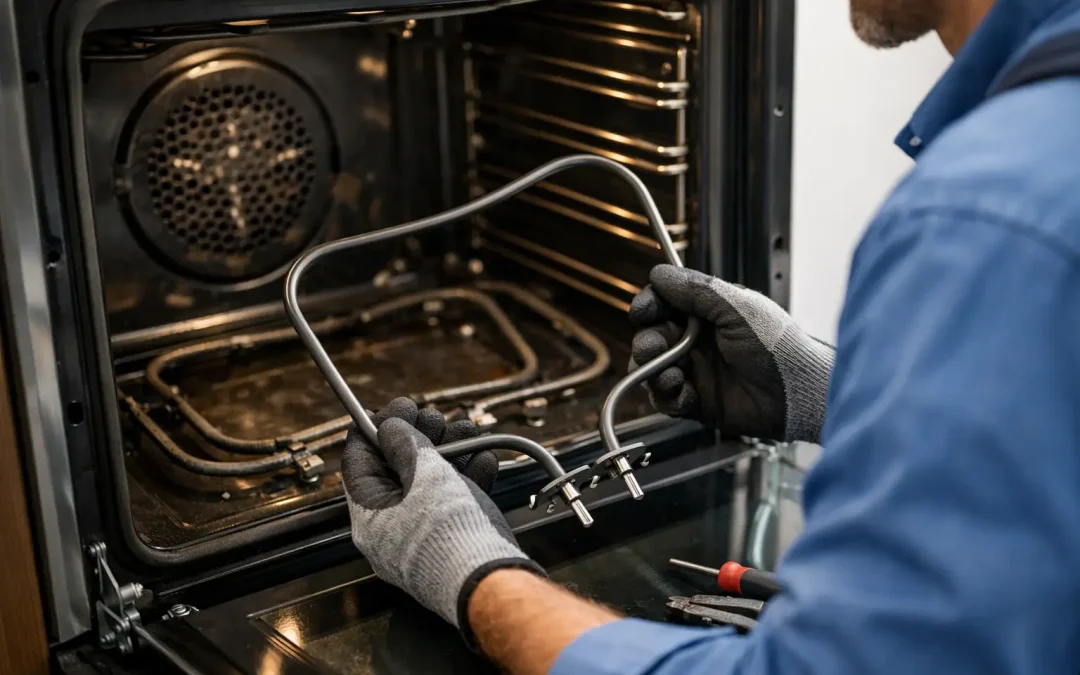
Electric ovens rely on separate elements to create heat. The bake element is usually located along the bottom of the oven cavity and does most of the work for roasting, baking, and casseroles. The broil element sits at the top and provides high direct heat. Some models also have a convection element around the fan at the back.
If one element fails, the oven may still appear to work. The display may light up, the clock may function, and a different cooking mode may heat normally. That can make the issue confusing. A failed lower bake element, for example, can leave the broiler working while food takes far too long to cook or browns unevenly.
Replacement is commonly the right fix when the element is visibly damaged, tests faulty, and the rest of the oven is operating as expected. It is generally a sensible repair for a unit that is in good overall condition, especially when the door seal, racks, controls, and cooktop are still serving your household well.
Signs your oven element may have failed
A heating element does not always fail with a dramatic spark. Sometimes the warning is simply a change in cooking results. Watch for recurring problems rather than judging the oven by one undercooked meal.
Common signs include:
- The oven takes much longer than usual to reach temperature.
- Food cooks unevenly, stays pale underneath, or burns on top.
- The element has blisters, cracks, breaks, burn marks, or areas that look swollen.
- The element glows only in certain spots or does not glow at all during a heating cycle.
- You see a flash, hear a pop, or notice a burning smell when the oven is turned on.
- The oven trips a breaker when a particular baking or broiling setting is selected.
A visible break in an element is a strong clue, but it is not the only clue. Elements can develop an internal fault that is not obvious from a quick look. Likewise, an element that glows red is not automatically healthy. It may still heat inconsistently or fail to reach the temperature selected.
If your oven trips the breaker, produces smoke, or shows signs of arcing, stop using it. Turn off power at the breaker rather than continuing to test cooking modes. Electrical faults can damage the appliance further and create a safety concern.
Why a proper diagnosis matters
It is tempting to order a replacement part as soon as the oven stops heating. The trouble is that several faults can produce nearly identical symptoms. Replacing the wrong part costs time and money, and it does not restore a working kitchen.
A technician checks whether the element is receiving the proper voltage and whether it has electrical continuity. They also inspect the terminals and wiring behind the oven cavity. Heat and age can weaken connections, and a burnt terminal can prevent a good element from working correctly.
Other possible causes include a faulty oven sensor, a malfunctioning electronic control, a damaged selector switch on older ranges, or an issue with the home’s power supply. Electric ranges typically use a 240-volt circuit. If one side of that supply is lost, the appliance may power on while heating performance becomes weak or unpredictable.
This is why accurate model information matters. Oven elements are not one-size-fits-all. Their shape, mounting points, wattage, terminal style, and electrical specifications must match the appliance. A part that looks close enough may not fit properly or may not be safe to use.
Can you replace an oven element yourself?
Some homeowners are comfortable handling minor appliance repairs. On certain freestanding electric ranges, a bake or broil element can be accessed from inside the oven and replaced after the appliance has been disconnected from power. Even then, there are trade-offs.
The screws holding an older element in place can seize, the terminals can be fragile, and the wires may slip back behind the rear panel when disconnected. Pulling on damaged wiring or fitting an incorrect aftermarket part can turn a simple repair into a larger electrical job. Wall ovens and built-in units can be more complicated because access, mounting, and ventilation are tighter.
A qualified appliance technician brings the correct testing equipment, confirms the root cause, and installs the right part for the model. That is particularly valuable if the element failed repeatedly, the oven has a burning smell, or the appliance is not heating to temperature after a previous repair.
For many households, professional service also means less disruption. Instead of spending an evening researching parts and managing electrical connections, you receive a clear explanation of the fault and a repair recommendation based on the appliance’s condition.
What affects oven element replacement cost?
The cost of oven element replacement depends on the appliance brand, model, element type, part availability, and the condition of the surrounding wiring. A standard bake element for a common range is often less involved than a convection element in a premium wall oven. If a burnt terminal block, damaged harness, or control issue is found during diagnosis, the repair scope may change.
Age matters, but it is not the only factor. A 10-year-old oven with one failed element may still be worth repairing if it has been reliable and replacement parts remain available. On the other hand, a unit with multiple heating problems, failing controls, damaged door hinges, and costly proprietary parts may warrant a conversation about replacement.
An honest repair recommendation should account for more than the price of today’s part. It should consider reliability, safety, the appliance’s overall condition, and how much inconvenience another breakdown would create for your household or rental property.
How to protect a new oven element
Elements wear out over time, but a few habits can reduce unnecessary strain. Avoid lining the oven floor with aluminum foil unless the manufacturer specifically permits it. Foil can trap heat, interfere with airflow, and contribute to overheating around the lower element.
Keep heavy spills from baking onto the element and clean the oven according to the manufacturer’s guidance. When using self-cleaning cycles, remember that the extreme temperatures can be hard on older electrical components. If your oven is already showing unreliable heating, it is better to arrange service before running a self-clean cycle.
An oven thermometer can also be useful when cooking results seem inconsistent. It will not diagnose an electrical fault on its own, but it can help show whether the oven is reaching and maintaining a reasonable temperature. If the difference is significant or keeps changing, book a diagnosis rather than continually adjusting recipes.
Fast local help for electric oven repairs
A failed oven element does not have to mean weeks without home-cooked meals. Instant Appliance Repair provides in-home electric oven and range service throughout Halifax, Bedford, Dartmouth, Sackville, Timberlea, Fall River, and nearby Nova Scotia communities. A technician can identify whether the element is truly at fault, explain the repair in plain language, and advise when replacement makes better financial sense.
Completed repairs include a free service call, along with a 90-day parts-and-labour warranty. That gives you a clearer path forward than guessing at parts or continuing to use an oven that is heating unpredictably.
If your oven is underheating, tripping the breaker, or cooking unevenly, stop relying on workarounds. A timely diagnosis can often turn a frustrating supper-time problem into a safe, practical repair.