
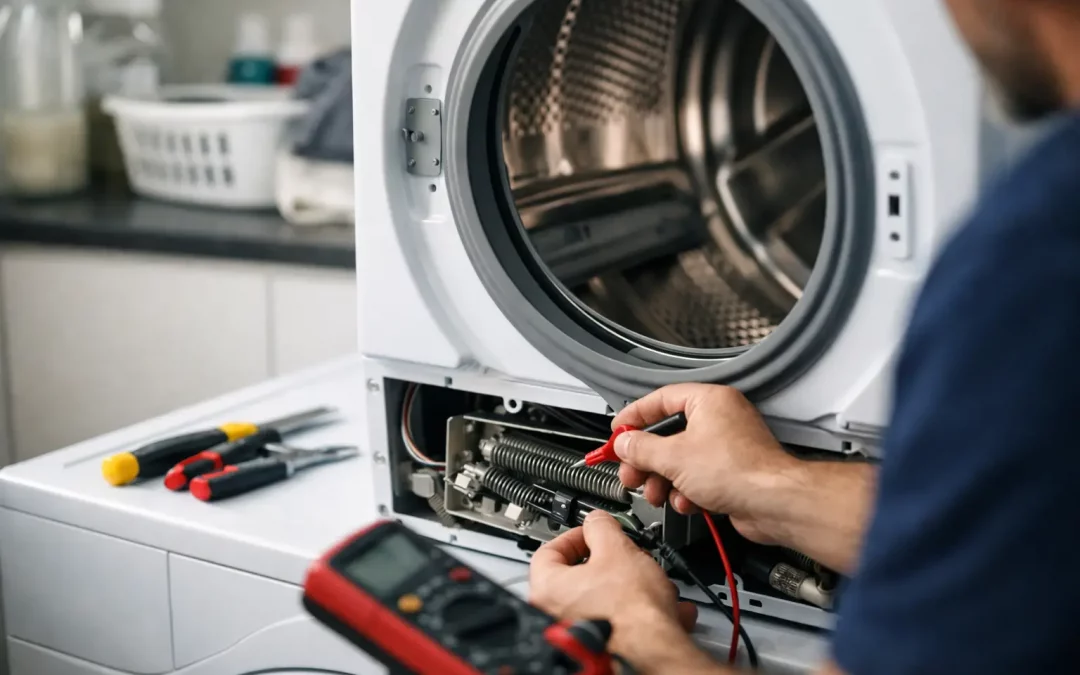
A dryer that tumbles normally but leaves every load cold and damp can derail a busy Halifax household fast. Before you start searching for dryer not heating repair Halifax service, it helps to know what may be happening, which simple checks are safe to make, and when the problem needs a qualified technician.
For electric dryers, no heat is not always a failed heating element. Airflow restrictions, a tripped breaker, a damaged thermal fuse, or a faulty control can all cause the same frustrating result. A proper diagnosis matters because replacing one part without finding the cause can lead to another breakdown soon after.
Why an Electric Dryer Runs Without Heating
Your dryer needs two separate systems to work: the motor turns the drum, while the heating circuit warms the air moving through the machine. That is why a dryer can still sound and look normal while producing no heat at all.
On many 240-volt electric dryers, two circuit breakers supply power. If one breaker trips, the drum may keep turning on partial power, but the heating circuit cannot operate. This is one of the first things worth checking. At your electrical panel, look for the dryer breaker, switch it fully off, then back on. If it trips again, leave it off and arrange service. Repeated tripping can point to an electrical fault that should not be ignored.
A blocked vent is another common cause. Dryers are designed to shut off heat when temperatures rise too high, and poor airflow can trigger that protection. Lint builds up gradually, especially in long vent runs, tight laundry rooms, or exterior vents that become obstructed by debris. In winter, snow and ice around an outdoor vent hood can also reduce airflow.
The heating element itself may have burned out, but it is only one possibility. Other internal causes include a blown thermal fuse, failed high-limit thermostat, damaged wiring, worn door switch, faulty timer, or an electronic control issue. These components need testing with the right tools, not guesswork.
Safe Checks Before Calling for Dryer Not Heating Repair in Halifax
A few basic checks can save time and help you describe the issue clearly. Always unplug the dryer before inspecting anything beyond the lint screen or exterior vent opening. Do not remove panels or bypass safety switches.
Start with the lint filter. Clean it thoroughly, even if it does not look full. Fabric softener residue can create a thin film that restricts air movement. Wash the screen with warm water and mild dish soap occasionally, then let it dry completely before reinstalling it.
Next, check the visible part of the exhaust path. Go outside while the dryer is running on a heated cycle and look for strong, warm airflow from the exterior vent. Weak airflow, no airflow, or a vent flap that barely opens suggests a blockage or crushed duct. A dryer should never vent into a garage, attic, crawlspace, or room inside the home.
Use this short checklist before booking service:
- Confirm the dryer is set to a timed or high-heat cycle, not air fluff or no-heat.
- Reset the dryer breaker fully off and then on once.
- Clean the lint screen and check that the exterior vent flap can open freely.
- Avoid running another load if you smell burning, see scorch marks, or notice unusually high heat in the laundry room.
If the dryer heats for a few minutes and then turns cold, restricted airflow is especially likely. If it never heats at all but tumbles, the issue may be power supply or an internal heating component. Either way, continuing to run the dryer without resolving the problem can increase wear and create a lint-related fire risk.
Signs the Vent May Be the Real Problem
Many homeowners assume a cold dryer means an appliance failure, but venting deserves close attention. A clogged vent can make drying times longer long before heat disappears completely. You may notice clothes feeling hotter than usual, a musty smell in the laundry area, excess lint around the door, or a dryer cabinet that becomes very hot.
The trade-off is straightforward: cleaning a straightforward, accessible vent may solve the issue and protect the dryer, while a hidden blockage, damaged duct, or long run may require professional attention. Flexible plastic or foil-style ducts are more prone to crushing and collecting lint than properly installed rigid metal ducting.
Do not rely on a quick visual check alone. Lint can pack deep inside the duct or collect where the vent turns. If your dryer has been taking two or three cycles to dry towels, prompt vent inspection is worthwhile even if the machine is still heating.
When a Repair Is the Better Choice
A dryer that is under ten years old, in otherwise good condition, and has a repairable part issue is often worth fixing. Thermal fuses, heating elements, thermostats, and certain switches are common repairs when the rest of the appliance is sound. The right choice depends on the dryer’s age, condition, repair cost, and whether parts are available for your model.
Replacement may make more sense when the dryer has several problems at once, has extensive corrosion or drum damage, or needs an expensive control board on a much older unit. A reliable technician should explain the likely repair, the expected cost, and the practical options before work begins. You should not feel pressured to repair an appliance that no longer makes financial sense.
For landlords and property managers, quick diagnosis is particularly valuable. A no-heat dryer can affect tenant comfort and create unnecessary repeat calls if the underlying vent or electrical issue is missed. Clear communication about the fault and the repair performed helps prevent that.
What a Professional Dryer Diagnosis Includes
A proper in-home diagnosis begins with the basics: confirming the correct voltage supply, checking the operating cycle, and assessing airflow. The technician then tests relevant electrical components safely, including the heating element, thermal fuse, thermostats, and wiring connections. This process identifies the failed part while also looking for the condition that may have caused it to fail.
For example, a thermal fuse can fail because of poor venting. Replacing the fuse without addressing airflow may restore heat briefly, but the new part can fail again. That is why practical advice is part of a good repair visit, not an extra.
Instant Appliance Repair provides electric dryer service across Halifax Regional Municipality and nearby Nova Scotia communities, with fast appointment options when availability permits. Homeowners receive a clear explanation of the issue, and every completed repair includes a free service call plus a 90-day parts-and-labour warranty.
Keep Your Dryer Heating Efficiently
Once the dryer is working again, a little routine care can extend its life. Clean the lint screen after every load, keep the area around the dryer clear, and make sure the vent outlet remains open year-round. Have the full vent path checked when drying times begin creeping up rather than waiting for the heat to stop altogether.
Avoid overloading the drum as well. Large, tightly packed loads restrict tumbling and airflow, leaving damp clothing behind even when the dryer is technically heating. Separating heavy towels from lighter fabrics can shorten drying time and reduce strain on the appliance.
A cold dryer is inconvenient, but it does not have to turn into a larger laundry-room problem. If the breaker and visible airflow checks do not restore heat, stop running the machine and arrange a professional diagnosis. A clear answer now can help you get back to dry laundry and a safer, more efficient home.