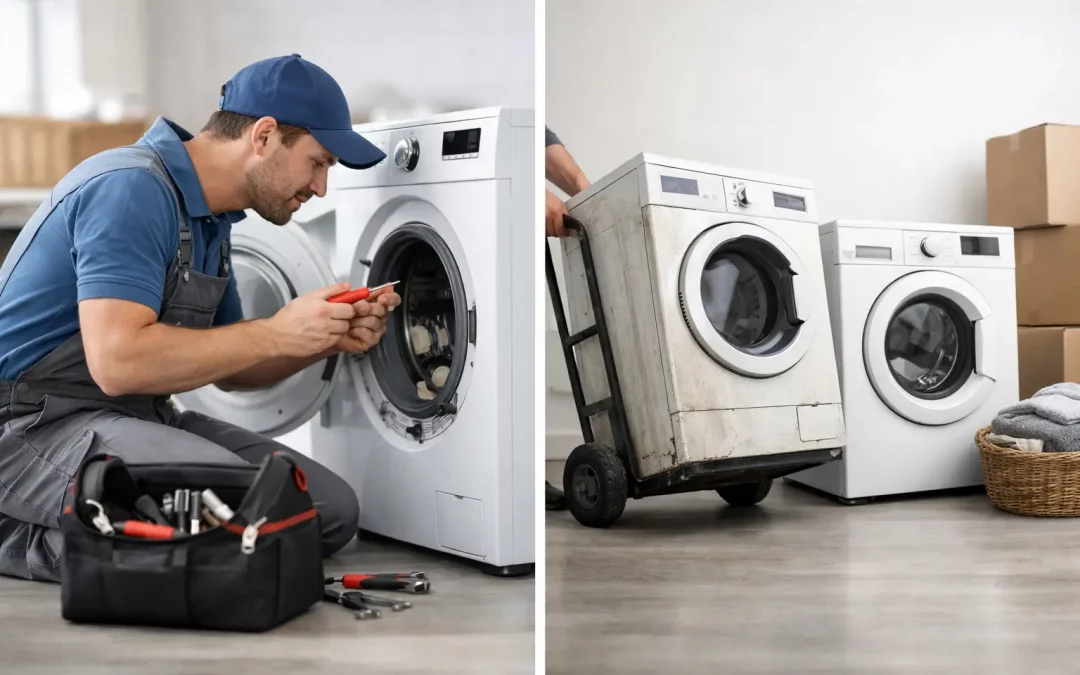
A washer that stops mid-cycle can turn a normal week into a pile of damp towels, school uniforms, and unanswered questions. Washing machine repair versus replacement is not just about the price of one repair. It is about the age of the machine, the nature of the fault, its condition overall, and whether a replacement will genuinely give your household better value.
For homeowners, landlords, and property managers across Halifax Regional Municipality, the best choice is usually clearer after a proper in-home diagnosis. A noisy spin cycle may be a manageable repair. A major failure in an older washer with recurring problems may be a sign that it is time to shop. The goal is not to keep every appliance running forever. It is to spend wisely and get reliable laundry service back as quickly as possible.
Washing Machine Repair Versus Replacement: Start With the Fault
The same symptom can point to very different problems. A washer that will not drain might have a blocked drain pump, a worn pump, a damaged hose, or an issue with the control system. A machine that will not spin could have an unbalanced load, a faulty lid lock, a worn belt on some models, a motor problem, or damaged suspension components.
This is why guessing based on a sound, error code, or online video can be costly. Some faults are relatively straightforward and worth repairing even on a machine that is no longer new. Others involve several expensive components or indicate wear that will continue to cause trouble.
Repairs are commonly worth considering when the washer has one clear, isolated issue, such as a failed door latch, inlet valve, drain pump, hose, belt, or suspension part. These components can prevent the entire appliance from operating, but replacing them may restore years of useful service.
A cracked tub, serious transmission or bearing failure, extensive corrosion, or a failed control board on an older unit can change the calculation. These repairs can be labour-intensive, and an older washer may still have other worn parts waiting behind the current problem.
Age Matters, But It Is Not the Whole Story
Most washing machines last roughly 10 to 14 years, depending on the model, usage, installation, maintenance, and water conditions. A machine used daily by a large family will naturally experience more wear than one used a few times each week.
As a general rule, repairing a washer under seven or eight years old often makes sense if the repair is reasonable and the machine has otherwise been dependable. Between eight and 12 years, the decision depends more heavily on the repair cost and the washer’s service history. Once a machine is beyond its typical lifespan, replacement becomes more appealing when a major component fails.
Still, age is only one clue. A well-maintained, higher-quality washer may be worth repairing at 11 years old. A poorly performing machine at five years old, especially one with repeated electronic or mechanical problems, may not deserve another major investment.
Ask yourself a practical question: has this washer been reliable until now, or has it become a regular source of leaks, incomplete cycles, unusual noise, and service calls? One repair after years of dependable use is very different from the third repair in two years.
Compare the Real Costs, Not Just the Repair Bill
It is tempting to compare a repair estimate with the sale price of the least expensive new washer. That comparison misses several costs. A new machine may also involve delivery, installation, removal of the old appliance, new hoses or connections, and time spent finding a model that fits your laundry space.
A useful guideline is to consider replacement when the repair approaches about half the cost of a comparable new washer. It is a guideline, not a hard rule. If a repair costs less than half of replacement and your washer is in good condition, repair is often the more sensible choice. If the machine is near the end of its expected life and needs an expensive repair, putting that money toward a new appliance can reduce the chance of another disruption soon after.
When comparing costs, think about these four factors:
- The repair estimate, including parts and labour.
- The washer’s age, condition, and history of previous repairs.
- The full installed cost of a replacement, not only its advertised price.
- The likely reliability you will get over the next few years.
A professional diagnosis gives you a firm starting point. It identifies the failed component, checks for related wear, and helps prevent you from replacing a washer that only needs a practical repair.
Signs Repair Is Usually the Better Choice
Repair is often the right call when the washer is not leaking badly, has no structural damage, and has served your home reliably. A single failed part does not mean the appliance is finished.
For example, a washer that fills but does not start may have a lid lock or door lock issue. A front-load washer with water left in the drum may need a drain system repair. Excessive shaking can result from worn shock absorbers or suspension rods. These faults can be frustrating, but they are not automatically replacement-level problems.
Repair may also be the better environmental choice. Replacing an appliance before its useful life is over adds unnecessary waste, while a targeted repair can keep a working machine in service. The key is making sure the repair is sound and that the rest of the washer is in reasonable condition.
When Replacement Makes More Sense
Replacement deserves serious consideration when the washer has a major mechanical failure, recurring faults, or signs of widespread deterioration. Rust around the cabinet may be cosmetic at first, but corrosion near the base, tub, or connections can lead to more significant concerns. Repeated leaks can also damage flooring, baseboards, and the area below a second-floor laundry room.
A washer that is extremely loud during spin may have failed bearings or a damaged tub assembly. Depending on the model, this can be a substantial repair. If it is paired with a long list of other concerns, such as poor cleaning results, unreliable controls, a worn door seal, or frequent error codes, replacement may be the more economical path.
Energy and water use can matter too, particularly if you are replacing a much older top-load machine. Newer washers may use less water and offer larger capacities or more effective spin cycles. However, efficiency alone does not always justify replacing a unit that is working well. Savings accumulate gradually, while the cost of a new appliance is immediate.
Do Not Ignore Leaks, Burning Smells, or Electrical Concerns
Some washer problems call for prompt service rather than a wait-and-see approach. Turn off the water supply and stop using the machine if you see active leaking, smell burning, notice smoke, hear grinding that suddenly becomes severe, or find that the appliance is tripping a breaker.
Do not keep restarting a washer that is leaking or making harsh mechanical sounds in the hope that it will finish the load. Continued operation can turn a repairable issue into water damage or a larger appliance failure. If a leak is coming from a hose connection, water inlet, drain area, or door seal, drying the area and arranging diagnosis quickly can save a great deal of trouble.
A Local Diagnosis Makes the Decision Easier
The right answer should not feel like a sales pitch. A technician should explain what failed, what the repair involves, what it is likely to cost, and whether the washer’s age and condition make the investment sensible. That information lets you decide with confidence instead of replacing an appliance based on frustration alone.
Instant Appliance Repair provides residential washer diagnosis and repair with practical advice for homeowners throughout Halifax and nearby Nova Scotia communities. With a free service call included with every completed repair and a 90-day parts-and-labour warranty, the focus is on reducing uncertainty when laundry cannot wait.
Before buying a new washer or giving up on the one you have, get a clear diagnosis. A straightforward repair may put your laundry room back in order sooner than expected. If replacement is the smarter move, you will know you are making that choice for the right reasons.