
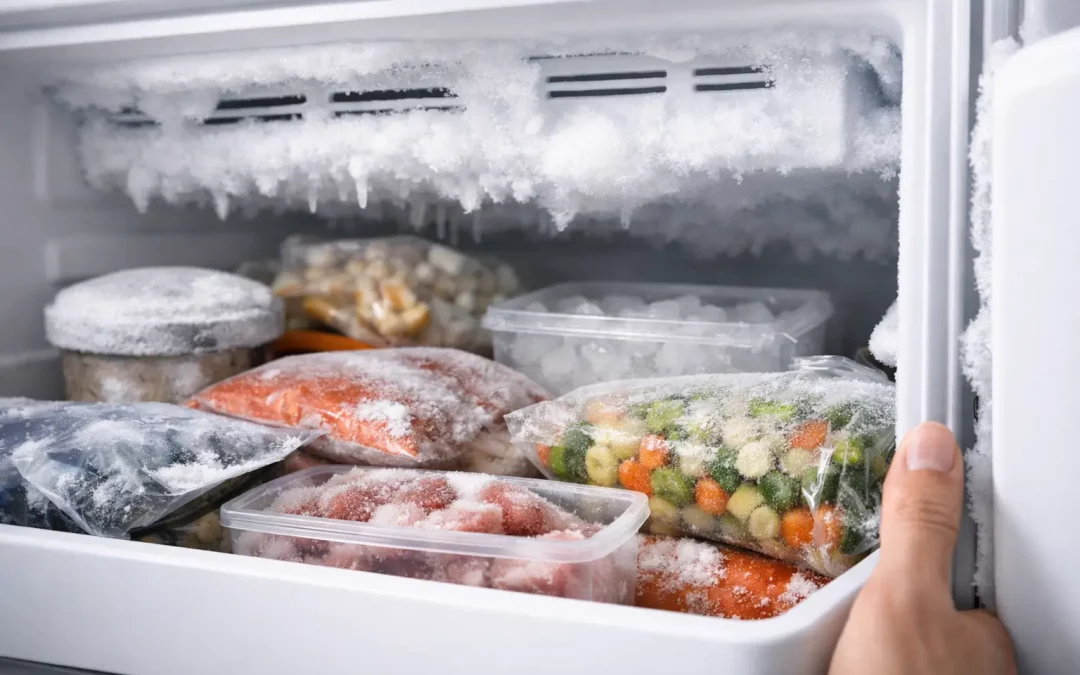
A light coating of frost after months of regular use is one thing. Ice that returns days after you clear it out, freezes food packages together, or keeps the freezer door from closing properly is another. If you are asking what causes freezer frost, the short answer is moisture getting into a space that is meant to stay cold and dry.
Every time warm, humid household air enters a freezer, that moisture condenses and freezes on the coldest surfaces. A little frost is normal, especially in a manual-defrost freezer. Heavy or repeated frost usually means air is getting in too often, the door is not sealing, or the appliance is not completing its automatic defrost cycle.
What Causes Freezer Frost to Build Up?
Frost is not usually the problem by itself. It is a clue. Finding where the moisture is coming from helps determine whether a simple habit change will fix it or whether the freezer needs a repair.
The door is not sealing tightly
A worn, torn, dirty, or warped door gasket is one of the most common causes of freezer frost. The rubber seal around the door must sit flat against the cabinet all the way around. Even a small gap lets humid air enter continuously, creating frost near the door opening, along the shelves, and on food packages.
Check for crumbs, sticky spills, or hardened residue on the gasket and the cabinet edge. Clean both gently with warm, soapy water and dry them thoroughly. Look for cracks, loose sections, or areas that stay flattened instead of springing back into shape.
A simple paper test can help. Close the freezer door on a sheet of paper, then pull the paper out. You should feel resistance around the full perimeter of the door. If it slides freely at one spot, the gasket or door alignment may need attention.
The door is being opened too often or left ajar
Freezers work hard when the door is opened frequently, particularly in busy family kitchens. Each opening brings in warmer air. In Halifax-area homes, indoor humidity can also be noticeable during damp weather, which gives that incoming air more moisture to deposit as frost.
A door that is slightly open for several hours can produce a surprising amount of ice. Overfilled shelves, a package sticking out, or a drawer that is not fully pushed in can all prevent the door from closing. Before assuming there is a mechanical issue, make sure nothing inside is interfering with the door.
Warm or uncovered food is adding moisture
Putting hot leftovers directly into the freezer introduces steam, which quickly turns to frost. Food that is loosely wrapped or stored in containers without proper lids also releases moisture over time.
Let cooked food cool enough that it is no longer steaming before freezing it, but do not leave perishable food at room temperature for extended periods. Divide large portions into smaller containers so they cool faster, use freezer-safe airtight packaging, and remove as much air as practical from bags. This protects food quality as well as reducing frost.
The automatic defrost system has failed
Most modern frost-free freezers periodically warm the evaporator coils just enough to melt accumulated frost. The water drains away, and the freezer returns to its normal cooling cycle. When one part of this system stops working, ice can steadily build up behind the interior back panel.
The issue may involve the defrost heater, defrost sensor or thermostat, control board, timer, wiring, or a blocked drain. This type of frost is different from a little ice around the door. You may notice a thick sheet of ice on the rear freezer wall, weak airflow, food becoming softer, or the refrigerator section warming up in a fridge-freezer combination.
Unplugging the appliance and fully defrosting it may restore cooling temporarily, but it will not repair a failed component. If the frost comes back quickly after a complete defrost, a professional diagnosis is usually the sensible next step.
Where the Frost Appears Can Point to the Cause
The location and shape of the ice often tell a useful story. Frost concentrated near the front of the freezer or around the door generally points to warm-air infiltration. Check the gasket, door hinges, food placement, and whether the cabinet is level enough for the door to close properly.
A heavy ice layer on the rear interior panel is more likely connected to the defrost system. In some cases, you may hear the fan struggling or notice that air is no longer circulating well. Do not chip away at that ice with a knife, screwdriver, or other sharp tool. It is easy to puncture a panel, damage the evaporator, or cause an injury.
Ice on the freezer floor may mean defrost water cannot drain properly. A frozen or clogged drain tube can cause water to back up and refreeze at the bottom of the compartment. This is repairable, but it should be addressed before the ice affects drawers, door operation, or the appliance’s cooling performance.
How Much Frost Is Too Much?
A manual-defrost chest freezer can develop a thin layer of frost over time, and that is expected. Once frost is roughly 6 mm thick, it starts reducing usable space and can make the freezer less efficient. A planned defrost is worthwhile before the ice gets heavier.
A frost-free upright freezer or refrigerator freezer should not need regular manual defrosting. A small amount of frost after a door is left open may clear on its own. Repeated buildup, thick ice, or frost paired with warmer temperatures is not normal and deserves attention.
It also depends on the appliance’s age and condition. An older freezer may have a tired gasket and still cool well after a relatively inexpensive replacement. On the other hand, persistent frost combined with poor cooling, unusual compressor noise, or frequent cycling may warrant a broader repair assessment.
Steps You Can Take Before Booking a Repair
Start by checking the simple causes safely. Confirm the door closes without obstruction, inspect and clean the gasket, and make sure the freezer is not packed so tightly that air cannot circulate. Verify the temperature setting too. For most household freezers, -18 C is the target. Setting it much colder will not solve an air leak or defrost failure, and it may increase energy use.
If there is significant ice, move food to a cooler or another freezer and follow the manufacturer’s instructions for defrosting. Unplug the appliance, leave the door open, place towels around the base, and allow the ice to melt naturally. Never use a hair dryer near standing water or apply direct heat to plastic liners.
After the freezer is dry and restarted, watch what happens over the next several days. Frost that returns near the door may confirm a seal issue. Frost that reappears behind the rear panel, especially with poor cooling, points more strongly to a defrost-system problem.
When to Call for Freezer Repair
Call for service when the freezer cannot hold temperature, frost returns soon after a full defrost, the rear wall is heavily iced, or the door seal is visibly damaged. Landlords and property managers should also act promptly, since a freezer that is not maintaining temperature can lead to food loss and an avoidable tenant disruption.
A technician can test the defrost components, inspect the evaporator fan and drain system, check the gasket and door alignment, and explain the repair in plain language. For homeowners across Halifax Regional Municipality and nearby Nova Scotia communities, Instant Appliance Repair provides fast, in-home support when a freezer problem is more than a cleaning job.
A freezer should protect the food you rely on, not turn every grocery trip into a battle with ice. Paying attention to where the frost forms and how quickly it returns can help you make the right call before a small air leak or defrost fault becomes a full cooling failure.