
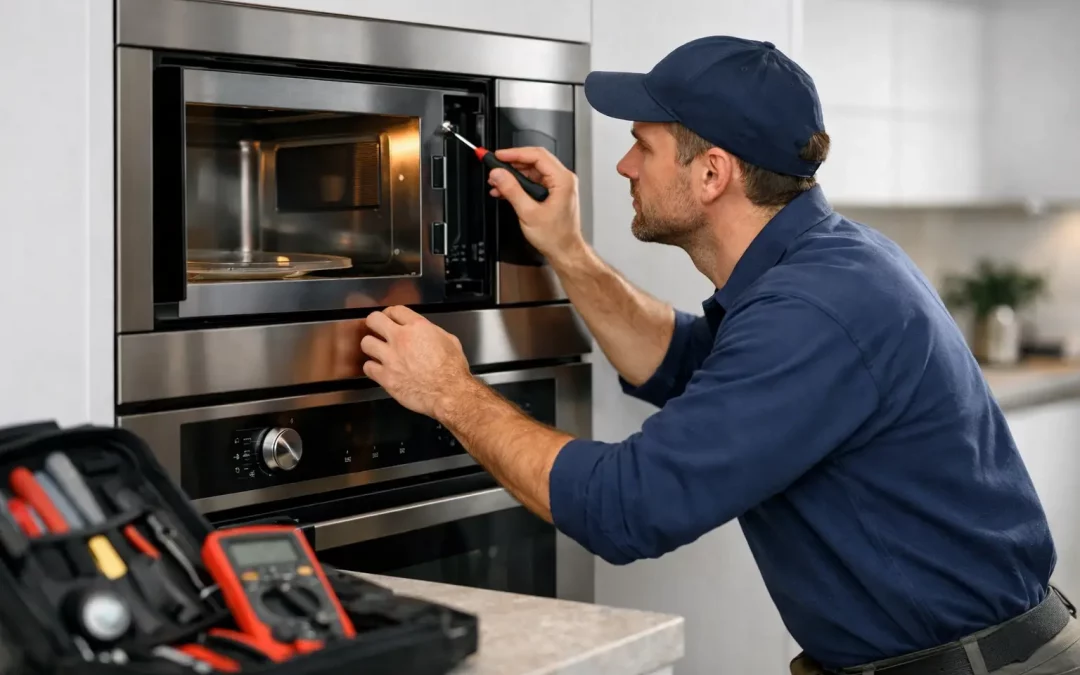
A built-in microwave that suddenly will not heat, trips the breaker, or refuses to open can bring a busy Halifax kitchen to a standstill. Built in microwave repair Halifax homeowners need is not just about restoring a quick way to reheat dinner. It is about diagnosing the fault safely, protecting the surrounding cabinetry, and making a sensible decision about repair versus replacement.
Unlike a countertop model, a built-in microwave is part of your kitchen installation. It may be fitted into a cabinet, combined with a wall oven, or installed above a cooktop with ventilation. That makes access, electrical safety, and correct reinstallation especially important.
When built in microwave repair in Halifax makes sense
Many microwave problems are repairable, particularly when the unit is otherwise in good condition and matches the rest of the kitchen. A technician can often resolve issues involving door switches, fuses, turntable components, control panels, interior lights, cooling fans, or mounting hardware.
Repair is often the practical choice when the microwave is relatively recent, is a premium built-in model, or would be difficult to replace without altering cabinetry. A like-for-like replacement is not always available, especially for older cutout sizes. Even if a new microwave has a similar exterior width, its trim kit, venting requirements, or mounting points may differ.
On the other hand, replacement may make more sense when the appliance has repeated major failures, severe interior damage, unavailable parts, or a high repair cost compared with a compatible new unit. The right answer depends on the model, age, condition, and fault. A clear diagnosis gives you the information to decide without guessing.
Common built-in microwave problems
A microwave can appear completely dead, run without heating, or develop smaller problems that become frustrating over time. The symptom matters because it helps narrow down the likely cause.
The microwave runs but does not heat
When the display works, the interior light comes on, and the turntable turns but food stays cold, the issue may involve high-voltage components such as the magnetron, diode, capacitor, or transformer. These parts require professional testing. Microwaves can retain a dangerous electrical charge even after they have been unplugged, so this is not a safe home repair.
A no-heat problem does not automatically mean the appliance is finished. Depending on the make, model, and component involved, repair can still be worthwhile.
The door will not latch, open, or close properly
A built-in microwave door needs to close firmly for the appliance to operate safely. Broken handles, worn latches, damaged hinges, and faulty door switches can prevent a cycle from starting or cause it to stop unexpectedly.
Avoid forcing the door open or closed. Doing so can damage the latch assembly, trim, or cabinet surround. A technician can inspect the door alignment and switches, then explain whether the faulty part can be replaced.
It trips the breaker or sparks inside
If the microwave trips a breaker, produces a burning smell, sparks, or makes loud buzzing sounds, stop using it. Remove any metal item from the cavity only if it is safe to do so, and do not run another test cycle.
Sparking can sometimes come from a damaged waveguide cover, food residue, or a worn interior rack support. It can also point to a more serious electrical issue. Breaker trips deserve prompt attention because the source may be in the appliance, its dedicated circuit, or the installation.
The display, buttons, or touchpad are unreliable
Unresponsive controls, flashing displays, random beeping, or a clock that resets can be caused by a failing control board, touchpad, wiring connection, or power supply issue. Before arranging service, check whether the problem follows a power outage or a tripped GFCI outlet. If power is stable and the controls remain unreliable, professional diagnosis is the sensible next step.
The turntable does not rotate or the fan is noisy
A stopped turntable may be as simple as a misaligned roller ring or worn drive coupling. Noisy cooling fans, rattling sounds, or a fan that continues running too long can also indicate a component issue. These are usually less urgent than sparking or breaker trips, but they should not be ignored. Proper airflow helps protect internal components from overheating.
What to do before you book service
A few safe checks can help you describe the problem clearly. Confirm that the circuit breaker has not tripped and that the appliance has power. Check the door for visible damage, make sure the turntable and roller ring are seated correctly, and remove food splatter from the interior once the microwave is cool.
Write down the model number, usually found on the door frame, inside the cavity, or along the side of the unit. It also helps to note when the issue happens. Does it fail on every setting? Does it start and stop? Does it only occur when using the vent fan? These details help a technician arrive prepared.
Do not remove the outer cover, attempt to bypass a door switch, or continue operating a microwave that sparks, smells burnt, or trips the breaker. Built-in units add another complication: removing the appliance incorrectly can damage the cabinet opening, trim, power connection, or venting arrangement.
What a professional microwave repair visit involves
A proper in-home visit starts with the symptom you have noticed, followed by testing and inspection of the appliance. The technician checks the power supply, door operation, control functions, ventilation, mounting, and relevant internal components. With built-in models, they also consider how the microwave has been installed and whether it can be safely removed and resecured.
The goal is not simply to replace a part. It is to identify why the part failed and confirm the unit is operating correctly afterward. For example, a blown fuse may be the visible problem, but the underlying cause could be a door switch or another component that needs attention.
At Instant Appliance Repair, homeowners receive a plain-language explanation of the issue and the available options before work moves ahead. Completed repairs include a free service call and a 90-day parts-and-labour warranty, giving you useful protection after the job is done.
Repair, replacement, and installation trade-offs
Replacing a built-in microwave can be more involved than replacing a countertop unit. Measurements must match the existing opening, the electrical setup must be suitable, and the appliance needs adequate ventilation. Some models use trim kits or proprietary mounting systems that are not interchangeable.
If replacement is the better option, measure the cabinet opening rather than relying only on the old microwave’s exterior dimensions. Check the required clearance, electrical requirements, and whether the new model is designed for built-in use. A countertop microwave should not be installed in an enclosed cabinet unless the manufacturer specifically approves that application.
For landlords and property managers, a quick repair assessment can also prevent unnecessary disruption for tenants. A unit that can be repaired promptly may avoid coordinating cabinet modifications, appliance delivery, and a longer kitchen outage.
Keeping your built-in microwave working longer
Regular cleaning is one of the simplest ways to reduce avoidable trouble. Wipe food splatter from the cavity, door seal area, and underside of the appliance after use. Grease and residue can contribute to odours, arcing, and hard-to-clean damage over time.
Use microwave-safe containers, avoid running the appliance empty, and make sure the door closes without obstruction. If your unit has a range hood function, clean or replace filters according to the manufacturer instructions. Good airflow matters, especially in an over-the-range installation where heat and cooking grease are part of daily use.
A built-in microwave should feel like a dependable part of the kitchen, not a source of daily workarounds. If yours is acting up, stop using it when safety signs appear, keep the model information handy, and get a clear professional assessment before a small problem turns into cabinet damage or a longer interruption at home.